
Annonces
The economic impact of TV broadcasting rights on Europe’s big 5 leagues by 2026 is estimated at a 12% increase, reflecting football’s growing value as a global entertainment product and financial engine.
Professional football is intrinsically linked to the media economy, and the economic impact of TV broadcasting rights on Europe’s big 5 leagues in 2026 is a burning topic. With projections pointing to a potential 12% rise in that revenue, it is crucial to analyse what it means for clubs, investors and, of course, fans. This financial dynamic is redefining the landscape of the world’s most popular sport.
TV Rights: The Financial Engine of Modern Football
Television broadcasting rights are the cornerstone of European clubs’ financial stability and growth. This revenue, generated by selling the rights to broadcast matches, allows leagues and teams to fund player wages, facilities, development programs and transfers.
Annonces
Without these colossal sums, the level of competition and the spectacle offered by the Premier League, La Liga, Serie A, the Bundesliga and Ligue 1 simply would not be the same. The evolution of these rights directly reflects the appeal and global reach of those leagues.
The Historic Evolution of Television Revenue
Since the first broadcasts, television revenue has grown exponentially. What was once a supplement has become the main source of income for many clubs. Broadcasting technology, rising audiences and football’s globalisation have transformed a local market into an international arena.
- The 1980s-90s: The start of significant monetisation with the rise of pay channels.
- The 2000s: Values exploded with the arrival of new players and increased competition.
- The 2010s: Massive internationalisation and record multi-year contracts.
This upward trajectory is the product of constant demand for high-quality sports content able to captivate millions of viewers simultaneously. Broadcasters are willing to pay astronomical sums to reach that captive audience.
Annonces
In short, TV rights are not only a source of revenue; they are the barometer of European football’s economic health and overall popularity, largely determining the leagues’ ability to maintain their status as a global elite.
Analysing the Projections: Why a 12% Rise in 2026?
The forecast of a 12% increase in European league TV rights by 2026 is no accident. Several factors converge to justify such growth, rooted in changing media consumption habits and the continued expansion of the global football market.
These projections are based on rigorous market analysis, taking current and future trends in sports entertainment into account. Understanding the drivers of that growth is essential to grasping its implications.
Key Growth Factors
Several elements explain the anticipated rise. Football’s appeal is not fading, and competition between broadcasters is more intense than ever, pushing prices up. Streaming platforms also play a leading role in that dynamic.
- Increased broadcaster competition: New entrants (streaming platforms) and traditional players are competing for the rights.
- Internationalised audiences: European football attracts more and more fans outside Europe, notably in Asia and the Americas.
- Premium content inflation: Live sport remains one of the last bastions of linear television, generating strong value.
- Technological innovation: New viewing experiences (4K, virtual reality) that justify higher subscription prices.
These factors create an environment in which leagues are well placed to negotiate ever more lucrative contracts. The ability to offer a first-rate entertainment product, with global stars and high-stakes matches, is a major asset.
Demand for live football is insatiable, and broadcasters are ready to invest heavily to secure exclusivity. This situation, favourable to leagues and clubs, promises to reshape European football’s financial landscape still further in the years ahead.
The Impact on Clubs: Financial Gaps and Competitiveness
An increase in European league TV rights, positive though it is overall, is not without consequences for the competitive structure of the leagues. The impact on clubs varies considerably, often widening existing disparities between the giants and smaller sides.
Clubs with strong media exposure and a global fan base are generally the main beneficiaries of these increases, allowing them to invest more and widen the gap with less wealthy rivals.
The Big Clubs, the Main Beneficiaries
Historic clubs and global football brands such as Real Madrid, FC Barcelona, Manchester United and Bayern Munich naturally attract the biggest audiences and, consequently, a larger share of TV revenue. That financial windfall gives them a considerable advantage.
- Bigger transfer budgets: The ability to attract and retain the world’s best players.
- Improved facilities: Investment in stadiums, training centres and academies.
- Global marketing expansion: Strengthening their brand internationally, creating a virtuous circle.
That ability to spend more reinforces their sporting dominance and maintains their visibility, ensuring even higher future revenue. It is a cycle of accumulating wealth and power within the football ecosystem.
This concentration of wealth, however, raises questions about the competitive balance of the leagues. If a few clubs become too financially powerful, leagues could become more predictable, potentially at the expense of general interest and the variety of outcomes.
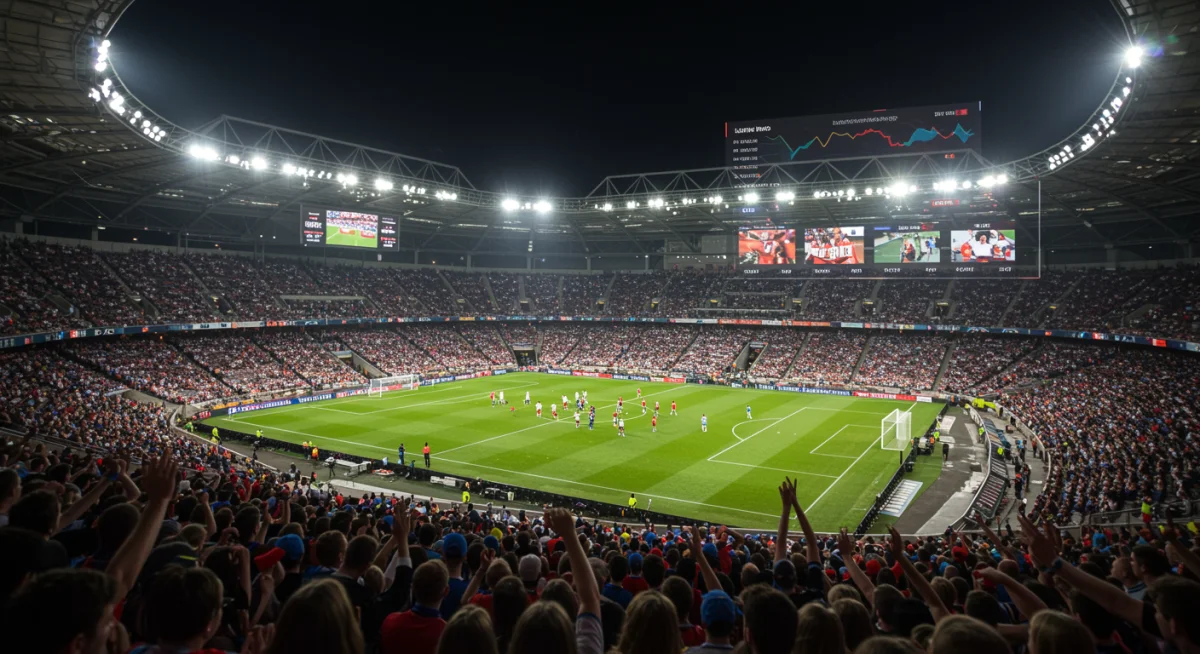
Broadcasting Strategies: The Role of Streaming Platforms
The sports broadcasting landscape has been revolutionised by the emergence and rise of streaming platforms. These new players are crucial to the increasing value of European league TV rights, bringing new audiences and innovative consumption models.
Their ability to offer viewing flexibility and global accessibility has transformed the way fans engage with football, forcing traditional broadcasters to adapt and innovate.
The Rise of OTT Services and Big Tech
Over-the-top (OTT) services and technology giants have become serious competitors for established broadcasters. Amazon Prime Video, DAZN and others have invested heavily in sports rights, recognising the pulling power of live football.
- Flexible subscription models: Sport-specific packages that attract new market segments.
- Global reach: The ability to broadcast matches worldwide, increasing the value of the audience.
- Data and personalisation: Using data to improve the user experience and target advertising.
These platforms do not merely broadcast; they seek to create an immersive experience, enriched with additional content, personalised analysis and interactive features. That user-focused approach justifies significant investment.
The arrival of these players has intensified competition, pushing rights prices to unprecedented highs. Leagues now have more partner options, allowing them to negotiate better deals and diversify their revenue.
The Challenges and Risks of Such Growth
While the rise in European league TV rights is broadly good news for football’s economy, it is not without challenges and risks. Rapid growth can create tensions and imbalances affecting fans, clubs and the integrity of the sport itself.
It is crucial to examine the potential negative repercussions in order to guarantee sustainable and fair growth for all stakeholders.
Accessibility for Fans and Market Fragmentation
One of the main risks is the fragmentation of broadcasting rights across multiple platforms. Fans can find themselves forced to take out several subscriptions to follow their favourite league in full, which can become expensive and frustrating.
- Higher costs for consumers: Multiple subscriptions needed to follow every competition.
- Piracy: The complexity and cost of access can push some fans towards illegal solutions.
- Losing the traditional audience: Less tech-savvy or less affluent fans could be left behind.
This situation raises questions about football’s accessibility for everyone and the risk of creating an elite of viewers. Leagues and broadcasters must find a balance between maximising revenue and preserving the fan base.
In addition, excessive dependence on TV revenue can leave clubs vulnerable to media-market fluctuations. A speculative bubble could burst, leaving many clubs in financial difficulty if values were to fall.
Looking Ahead: Towards Fairer Redistribution?
Faced with the projected increase in European league TV rights, the question of how revenue is redistributed becomes paramount. To ensure the durability and fairness of European football, mechanisms for sharing that windfall more effectively must be considered.
Fairer redistribution could not only narrow the gap between clubs but also guarantee competitiveness and appeal at every level of the game.
Redistribution Models and Regulation
At present, redistribution models vary from league to league, with some competitions favouring a more equal split than others. The Bundesliga, for example, is often cited for its more balanced model, while other leagues allocate a larger share to the most popular clubs.
- Salary caps and financial fair play: Measures to control club spending and promote sound management.
- More equal revenue sharing: Increasing the share allocated to smaller clubs to strengthen competitiveness.
- Solidarity funds: Creating mechanisms to support lower-division clubs and amateur football.
UEFA, as European football’s governing body, has a key role to play in promoting financial fairness. Its regulations, such as financial fair play, aim to limit excessive spending and encourage responsible budget management.
Ultimately, the goal is to maintain a delicate balance between the commercial appeal of the big leagues and the need to preserve diversity and competitiveness across the whole football ecosystem. An increase in TV rights must benefit every level of the sport if it is to be truly sustainable.
| Key Point | Brief Description |
|---|---|
| A 12% rise in TV rights | A forecast of significant growth in broadcasting revenue for Europe’s big 5 leagues by 2026. |
| Growth drivers | Increased broadcaster competition, internationalised audiences and the role of streaming platforms. |
| Impact on clubs | Widening financial gaps between big and small clubs, affecting competitiveness. |
| Challenges and redistribution | Risks of market fragmentation, costs for fans and the need for fair redistribution models. |
Frequently Asked Questions About European Football TV Rights
The rise is mainly down to intensifying competition between traditional broadcasters and new streaming platforms, the continued growth of European football’s global audience, and the enduring appeal of live sport as a premium product.
Streaming platforms such as Amazon Prime Video or DAZN increase the value of the rights by introducing new subscription models, broadening the geographic reach of audiences and offering personalised viewing experiences, which intensifies demand and competition.
Fans could face greater market fragmentation, forcing them to take out several expensive subscriptions to follow every competition. That raises questions about accessibility and could potentially fuel piracy.
Rising TV rights tend to widen the financial gap between big and small clubs. Wealthy clubs can invest more in talent and facilities, strengthening their dominance and potentially reducing uncertainty in results.
Yes, discussions are under way and models exist, as in the Bundesliga, for a more equal split. Regulations such as UEFA’s financial fair play also aim to promote sound management and reduce financial imbalances between clubs.
Conclusion
Analysing the economic impact of TV broadcasting rights on Europe’s big 5 leagues in 2026 reveals a landscape in transformation, with a projected 12% rise that will significantly reshape football. That growth, driven by broadcaster competition and the expansion of streaming platforms, offers immense opportunities for clubs and leagues in revenue and investment. It also raises major challenges, however, particularly around accessibility for fans and competitive fairness between clubs. It is imperative that football’s stakeholders work together to ensure this financial windfall benefits the whole ecosystem, encouraging fairer redistribution and preserving the integrity and universal appeal of the sport.