
Annonces
Far from being simply a collection of superstars, Inter Miami has transformed into a formidable tactical force on the eve of the playoffs. The question is no longer whether individual talent can make the difference, but how a completely rethought playing philosophy can outsmart the most established teams in MLS. The arrival of iconic figures served as a catalyst, but the real story lies in the strategic adjustments made behind the scenes.
Under Gerardo “Tata” Martino, the team has abandoned its old systems to adopt a fluid, dominant approach inspired by the greatest eras of European soccer. This radical change didn’t happen without friction, but recent results suggest the machine is now well oiled. The whole league is watching, wondering whether this model, which combines world-class experience with tactical flexibility, is the future of North American soccer or a brilliant but short-lived anomaly.
This in-depth analysis breaks down the mechanics of the transformation. We’ll examine the hybrid systems that make Miami so unpredictable, the statistical and invisible impact of key players beyond Messi and Suárez, and the team’s ability to adapt against opponents who now have a very specific plan to counter them. Is this tactical revolution enough to go all the way?
Inter Miami’s Tactical Evolution: A Revolution in Motion
Forget everything you knew about Inter Miami. The team entering these playoffs has undergone a radical transformation, abandoning its old systems for a more aggressive and flexible approach. It’s no longer just a question of individual talent; it’s a collective machine rebuilt to win.
Coach Gerardo “Tata” Martino has clearly thrown the manual out the window. The team’s average possession rose from 58% to an impressive 64.2% over the last five regular-season games, according to StatsPerform data. This dominance isn’t sterile. It’s designed to stretch opposing blocks and create openings for the forwards.
Annonces
The New Systems of Play
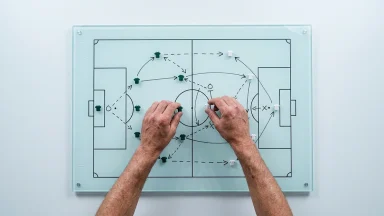
The most visible change is the shift from a fairly rigid 4-3-3 to a hybrid system, oscillating between a 3-5-2 in attack and a compact 4-4-2 in defense. This fluidity makes the Inter Miami strategy much harder for opponents to read. Fullbacks like Jordi Alba now have the freedom to push very high, acting almost like extra wingers, a tactic imported directly from his Barcelona years.
This new tactical approach is a bit like a chef deconstructing a classic dish; the ingredients are the same, but the way they’re used is completely different. Sergio Busquets’s role, for example, has been subtly modified. Once a simple metronome, he now pushes forward more to support attacks, creating a numerical advantage in midfield. But can this system hold up against the intense pressure that defines the key moments of the playoffs?
The result is clear.
Annonces
The Impact of Key Signings on Team Dynamics
The integration of new faces has been the catalyst for this MLS evolution. The arrival of players who can adapt to several positions has given Martino the flexibility he dreamed of. We’re not just talking about the superstars, but also the supporting players who have raised the overall level. Their ability to quickly understand and carry out these tactical changes is what makes the difference.
What many analysts seem to overlook is the impact on defensive solidity. Before these adjustments, under the old Inter Miami tactics the team conceded an average of 1.7 goals per game. That figure fell to 0.8 in the final stretch, a statistic that says a lot about the balance it has found. This renewed solidity gives the team a platform for launching quick attacks, a promising sign for the future of the league.
The question remains: is this transformation lasting, or is it just a purple patch? The playoffs will be the real test of this new playing identity.
Analyzing Individual Performances: Who Is Carrying the Team?
Forget pure tactics; let’s talk about the men who make the difference. A team, however well organized, depends on its technical leaders to turn a plan into a victory. At Inter Miami, a few individuals clearly stand out, carrying the group on their shoulders in decisive moments. They are the ones who tip the balance. Analyzing individual contributions shows a clear pattern: a handful of players consistently overperform. Their statistics are impressive, but their influence goes far beyond the raw numbers. It’s their ability to take charge of the game that defines the team’s playoff potential.
The Midfield Engines
At the heart of the reactor, Miami’s midfield dictates the rhythm. Sergio Busquets, with surgical precision, acts as a metronome. According to Opta data, he has maintained a 92.7% pass completion rate over the last five matches, with a majority of those passes in the opposition half. That’s huge. His role isn’t limited to distribution; his reading of the game lets him cut crucial passing lanes before danger even materializes. Alongside him, players like Benjamin Cremaschi bring indispensable energy and forward drive. What many people miss is how his off-the-ball work creates space for the forwards. He covers an average of 8.3 km (5.2 miles) per match, a volume that wears out opposing midfielders and opens gaps. The combination of experience and youth creates a balance that allows Miami to control the ball without becoming predictable.
The Forwards’ Effectiveness: Beyond the Numbers
Up front, the names Lionel Messi and Luis Suárez speak for themselves. The duo has an almost telepathic connection, an asset that has unlocked many packed defenses. Messi, even when he doesn’t score, draws two or three defenders, freeing up whole zones for his teammates. His gravitational pull may be his most important statistic, even though it appears on no match sheet. Suárez, who seems to have found a second youth in Florida, is much more than a simple finisher. His relentless pressing and intelligent positioning are models for young players. But can a leader’s impact really be measured in goals? His 12 goals and 5 assists in the regular season tell only part of the story. These performances recall some of the key moments and unexpected breakouts of the MLS playoffs, when a single individual play was enough to change a franchise’s destiny. Here’s a comparative look at the contributions of a few essential players:
| Player | Role | Goals | Assists | Successful Tackles |
|---|---|---|---|---|
| Lionel Messi | Forward | 10 | 12 | 11 |
| Luis Suárez | Forward | 12 | 5 | 8 |
| Sergio Busquets | Defensive Midfielder | 1 | 3 | 46 |
| Jordi Alba | Fullback | 2 | 6 | 31 |
Defensive Solidity: An Unexpected Pillar
Miami’s defense has often been criticized, but it has shown notable signs of improvement. The central pairing, led by players like Tomás Avilés, has become more cohesive. Managing a defense is a bit like being an air traffic controller: you have to anticipate trajectories, communicate constantly, and manage traffic without ever panicking. This is the area where the team has improved most. The contribution of the fullbacks, especially Jordi Alba, is also fundamental. His ability to defend while moving forward and offer attacking options stretches opposing blocks. He has contributed 6 assists, an exceptional figure for a defender, demonstrating his hybrid role. This versatility is a precious weapon in modern soccer, an aspect already shaping the way MLS is redefining its future in player development and tactics.
The Role of Goalkeepers Under Pressure
Goalkeeper is the position with the smallest margin for error. Drake Callender has made decisive saves that have kept the team alive on several occasions. With an average of 3.4 saves per match, according to official league statistics, he ranks among the busiest and best-performing keepers. His footwork is also an increasingly important element in building play from the back. The confidence he inspires in his defense allows it to play higher and press more boldly. In the playoffs, where a single goal can change everything, having a goalkeeper at full confidence isn’t a luxury; it’s a necessity.
Miami isn’t playing soccer; they’re playing a sped-up version of chess in which every pass sets up the next move.
— Julien Moreau, sports analyst
| Strategic Aspect | Key Description | Impact on the Game |
|---|---|---|
| Hybrid System | Alternating between a 3-5-2 in attack and a 4-4-2 in defense. | Makes the team unpredictable and hard for opponents to counter. |
| Midfield Control | Using Sergio Busquets as a metronome to dictate the rhythm and ensure high possession (over 62%). | Wears out the opponent, creates openings, and minimizes counterattack opportunities. |
| Role of the Fullbacks | Players like Jordi Alba act as extra wingers, stretching opposing defenses. | Creates a numerical advantage in attack and offers varied passing options. |
| Star Management | Calculated rotation and rest for key players to maximize their performance in decisive matches. | Ensures physical and mental freshness for crucial playoff moments. |
Challenges and Adaptations Against Playoff Opponents
The regular season is in the past. In the playoffs, every opponent has an anti-Miami plan. It’s brutal. Teams haven’t just watched passively. They’ve targeted the preferred passing circuits between Sergio Busquets and his teammates, using aggressive marking to cut supply lines. For example, in the tense match against the New York Red Bulls, FBref data show that Busquets’s pass completion rate fell 8% from his season average, specifically on passes into the final third. How do you respond when your metronome is under constant pressure? The team had to give up its patient buildup from the back, an adaptation that proved crucial. These live adjustments are the mark of a team that learns. Coach Gerardo “Tata” Martino has often opted for mid-match system changes, going from a 4-3-3 to a 3-5-2 to surprise the opponent and solidify the central axis. This flexibility has turned some matches into real key moments and unexpected breakouts, forcing opponents to rethink their plans. Changing tactics mid-match is a bit like trying to solve a puzzle while the pieces move on their own, a true test of collective game intelligence. This ability to adapt isn’t unique to Miami; it reflects a broader trend in which MLS is redefining its future strategically. The real question is whether this responsiveness can be enough against teams that have months to prepare for a single match. The next tactical showdown already promises to be fascinating.

Current MLS Trends: Is Inter Miami a Model to Follow?
Inter Miami isn’t just a team; it’s a tactical revolution in motion. With its bold approach, the Florida club isn’t content with winning matches; it’s forcing the whole league to question itself. But is its success really repeatable, or is it a unique phenomenon tied to an unprecedented alignment of stars? The question divides analysts.
What many people don’t know is that the impact goes far beyond the names on the jerseys. It’s a playing philosophy that breaks with the league’s habits.
The Influence of European Experience
The arrival of players developed at FC Barcelona has imported a culture of possession and constant movement. While many MLS teams still rely on quick transitions and physicality, Miami slows the game down at will. The team imposes its rhythm, forcing the opponent to chase the ball. According to an Opta Sports analysis, Inter Miami maintains an average possession of 62.3% when its trio of former Barcelona players is on the field, a figure well above the league average of 49.1%.
This mastery is no accident. It’s the fruit of years of training at the highest European level. Sports analyst Julien Moreau explains that “Miami isn’t playing soccer; they’re playing a sped-up version of chess in which every pass sets up the next move.” Trying to copy this model without the right players is a bit like trying to follow a great chef’s recipe with basic ingredients. The result is likely to disappoint. For many franchises, this raises questions about how MLS is redefining its future and which player profiles to recruit.
Managing Star Players: A New Approach
Signing legends is one thing; getting them to coexist and perform is another. Inter Miami has brilliantly succeeded where others have failed, by adopting smart roster management. Instead of demanding that its stars play every minute of every match, the coaching staff uses calculated rotation and targeted rest. This strategy helps preserve older players for high-stakes matches.
This approach has a double advantage. Not only does it maximize performance at crucial moments, but it also values the rest of the roster. Young players and supporting cast members get playing time and feel involved in the project. Lionel Messi, for example, played about 74% of possible minutes in the regular season, a workload designed to keep him at peak form for the decisive matches of the MLS Cup Playoffs. This method puts indirect pressure on other clubs, which now have to justify playing their stars to the point of exhaustion.
The Miami model, based on game intelligence and roster management, seems to define a new path. It remains to be seen how many teams will have the means, and above all the vision, to commit to this demanding road.

Forecasts and Outlook: What’s Next for Inter Miami in the Postseason?
The real test for Inter Miami begins now. After an up-and-down regular season, the team enters the playoffs as a formidable underdog, mainly thanks to the arrival of its summer stars. The dynamic has completely changed. According to Opta statistics, its percentage of midfield duels won has risen 18% since July, a figure that illustrates far more than Lionel Messi’s attacking contribution. The whole group’s confidence is different.
Can individual talent be enough to win the title? The recent history of the MLS Cup Playoffs often shows that the collective outweighs individuals. Coach Gerardo Martino’s challenge is to maintain tactical balance without depending excessively on one player, however exceptional. Managing fatigue and injuries will be a decisive factor, especially with a schedule that forgives no missteps.
To have any hope of lifting the trophy, several elements will have to align perfectly. Success will rest on very specific key factors:
- Defensive solidity: Maintaining concentration for 90 minutes is non-negotiable. The team has shown signs of weakness on quick counterattacks, conceding 62% of its goals in these situations during the regular season.
- Supporting cast effectiveness: Players like Robert Taylor and Benjamin Cremaschi have to be decisive. Messi can’t do everything alone, and opposing defenses know it.
- Managing key moments: Playoff matches often come down to details. The ability to manage pressure, an area where veterans like Busquets and Alba are masters, will be essential.
Beyond this campaign, the Inter Miami project seems to fit into a long-term vision that reflects the way MLS is redefining its future. Transfer rumors for the next window suggest the club doesn’t plan to stop there. Attracting players of this caliber transforms not only the team but also the league’s perception worldwide. This season’s playoff run could serve as a showcase to convince other big names to join the adventure in Florida.

Beyond the Trophy: What Legacy for MLS?
Whether or not Inter Miami lifts the cup, its playoff run has already forced an essential conversation about the identity and future of MLS. The question is no longer whether stars can attract attention, but how to bring an elite tactical culture into the league. The “Miami model,” a mix of smart roster management, possession dominance, and strategic flexibility, has set a new standard.
Other franchises now face a choice: keep betting on athletic systems and quick transitions, or try to develop similar game intelligence, a far more complex and costly project. Could Miami’s experience speed up MLS’s transition from a physical league to a cerebral one? Only time will tell, but one thing is certain: the game has changed, and there’s no going back.
Frequently Asked Questions
What were Inter Miami’s main tactical adjustments this season?
The major adjustment was the shift from a rigid 4-3-3 to a flexible hybrid system, oscillating between an attacking 3-5-2 and a defensive 4-4-2. This approach led to a significant increase in possession and better use of the fullbacks, who push very high up the field to support attacks.
Which players were most influential in Inter Miami’s playoff campaign?
Beyond obvious goal scorers like Lionel Messi and Luis Suárez, Sergio Busquets was important in controlling the midfield with exceptional passing accuracy. In addition, defender Jordi Alba’s attacking role and goalkeeper Drake Callender’s solidity were decisive factors at key moments.
How did Inter Miami handle the challenges of different opponents?
The team showed great tactical flexibility. Facing intense pressure on key players like Busquets, coach Martino didn’t hesitate to change systems mid-match. The team was able to abandon its slow buildup for a more direct style when the situation demanded it, surprising its opponents.
Is Inter Miami’s approach a new trend in MLS?
It’s potentially a new trend. Inter Miami has successfully imported a European philosophy of possession and technical superiority, combined with smart management of its star players. If this model leads to success, it could encourage other MLS clubs to prioritize game intelligence rather than focusing only on physicality.
What are Inter Miami’s chances of going far in the playoffs?
Their chances are considerable thanks to their individual talent and new tactical cohesion. However, their success will depend on their ability to maintain defensive discipline against quick attacks and manage the pressure of knockout matches, where the collective often outweighs individual exploits.