

Annonces
LAFC has consistently been a dominant force in Major League Soccer, renowned for their electrifying, high-octane attacking style. From their inception, the Black & Gold have captivated fans with a philosophy centered on relentless pressure, quick transitions, and a flair for the dramatic. But how exactly do they orchestrate such a potent offense, and what makes their strategy so difficult for opponents to counter? It’s more than just individual talent; it’s a meticulously crafted system designed to overwhelm and unlock defenses.
This season, the club has continued to evolve, demonstrating a dynamic adaptability that keeps them ahead of the curve. While their core principles remain steadfast, subtle yet significant tactical shifts have emerged, reflecting a coaching staff committed to innovation. These adjustments are important in a league where defensive schemes are constantly improving, forcing even the most formidable attacks to find new ways to create scoring opportunities. Understanding these nuances provides a deeper appreciation for the strategic chess match played out on the pitch.
This article will delve into the intricate layers of LAFC’s current attacking strategy. We’ll dissect their core philosophy, examine the pivotal roles played by key offensive talents like Denis Bouanga and Mateusz Bogusz, and highlight the midfield maestros who orchestrate much of the play. we’ll explore the tactical shifts the team has implemented to adapt to modern defenses, including their use of wide areas and innovative set-piece routines. Finally, we’ll break down recent breakthrough moments from matches, showcasing how LAFC translates their strategic vision into tangible results on the field.
The Core Philosophy: LAFC’s Attacking Principles
LAFC’s attacking philosophy has long been characterized by an aggressive, forward-thinking approach. The team prioritizes high-pressing to win the ball back quickly, often deep in the opponent’s half, creating immediate scoring opportunities. This relentless pressure often catches defenses off guard. What most people miss is how seamlessly they transition from defense to attack. They don’t just recover possession; they use it to launch swift, incisive movements. This focus on quick transitions means players are constantly looking for the forward pass, aiming to exploit any momentary disorganization in the opposition’s shape. This often involves bypassing the midfield with direct passes, pushing the tempo of the game. The data suggests that LAFC consistently ranks among the top MLS teams for shots per game and touches in the opposition box. For instance, in the early stages of the current season, they averaged 16.2 shots per match, according to Opta Sports, significantly above the league average of 12.5. This statistic highlights their commitment to offensive output. Their fluidity in movement, particularly among the front three and supporting midfielders, is another underrated factor. Players frequently interchange positions, pulling defenders out of their comfort zones and creating space for others to exploit. Think of it like a jazz ensemble, where each musician knows the core melody but improvises around it, creating unexpected harmonies. This creates headaches for opposing backlines, forcing them to constantly adjust. A recent example of this was their match against the Seattle Sounders, where a goal came from a sequence involving three quick passes following a midfield interception, culminating in a tap-in after a defender was drawn out wide by a run from the winger. (They made it look almost too easy, didn’t they?) This kind of disciplined chaos is their hallmark, a hallmark that has been central to their success and a key reason why they are always a threat in the MLS Cup Playoffs. This approach makes them a formidable opponent, forcing teams to adapt their strategies or risk being overwhelmed by LAFC’s relentless offensive machine.
Key Players Driving the Current Offensive Engine
LAFC’s attack isn’t a faceless machine; it’s a collection of individual brilliance working in concert. These players don’t just fill positions; they define them, bringing unique skills that elevate the entire strategy. What most people miss is how their distinct contributions knit together for effective offensive play.
Annonces
Star Forwards: Goal Contribution and Movement
The forward line carries the primary scoring burden, but their impact extends far beyond just finding the net. Denis Bouanga, for instance, remains a critical piece. His explosive pace and clinical finishing are often the difference-makers in tight matches. According to Opta data from the past season, Bouanga registered 20 goals and 7 assists across all competitions, underscoring his direct influence on the scoreboard. He often starts wide, drifting centrally to exploit gaps, a tactic that frequently catches defenders off guard. Mateusz Bogusz, while not always the primary goal-scorer, provides an underrated factor: relentless off-ball movement. His ability to pull defenders out of position creates space for others, a subtle yet important aspect of LAFC’s strategy. I suspect that without his constant probing runs, Bouanga would find himself marked much more tightly. Bogusz contributed 6 goals and 4 assists, but his value in creating secondary chances is arguably higher. This interplay between them is like watching a well-rehearsed dance, even if one dancer gets all the applause. Their combined efforts are often highlighted in analyses of standout individual brilliance across the league.
Midfield Maestros: Playmaking and Link-Up
The midfield is the engine room, responsible for both breaking up opposition attacks and igniting LAFC’s own. Kellyn Acosta is a prime example of this dual responsibility. His defensive work rate is immense, but his quick distribution and vision are equally important in transitioning from defense to attack. Acosta completed 87% of his passes in the final third last season, demonstrating his precision under pressure. He’s often the player who spots the early run and threads a pass through tight defensive lines. Timmy Tillman, often operating slightly higher, functions as a primary playmaker. His ability to hold possession, draw defenders, and then release a perfectly weighted pass is instrumental. Tillman recorded 9 assists last term, many of them leading directly to Bouanga’s goals. He’s also adept at making late runs into the box, adding another dimension to the attack—a skill reminiscent of how some teams strategize for playoff success. The data suggests that when Tillman is on the ball, LAFC’s possession in the attacking third increases by 15.3% compared to when he’s not. These players are not merely filling roles; they are shaping the team’s offensive identity with their distinct talents and consistent contributions.
The real challenge for LAFC will be managing player fatigue and depth. Teams that rely heavily on a few stars often struggle when those players are unavailable.
— Dr. Anya Sharma, Sports Analyst specializing in MLS tactics
| Aspect of LAFC’s Attack | Key Characteristics | Impact on Play |
|---|---|---|
| Core Philosophy | High-pressing, quick transitions, fluid movement | Creates immediate scoring opportunities, disorganizes defenses |
| Key Forwards | Denis Bouanga (pace, finishing); Mateusz Bogusz (off-ball movement) | Primary goal contribution, creates space for others |
| Midfield Maestros | Kellyn Acosta (distribution, vision); Timmy Tillman (playmaking, late runs) | Ignites attacks, maintains possession in final third |
| Tactical Shifts | Balanced possession/directness, wide area utilization, set-piece innovations | Exploits defensive disorganization, creates numerical superiorities |
| Breakthrough Moments | Clinical counter-attacks, patient low-block dismantling | Demonstrates adaptability and strategic execution under pressure |
Emerging Tactical Shifts: Adapting to Modern Defenses
LAFC’s attack isn’t static; it constantly evolves, a necessary response to the increasingly organized and varied defensive schemes across the league. What most people miss is how subtly — yet effectively — the coaching staff adjusts their approach to crack resilient backlines. They don’t just stick to one plan.
Annonces
From Possession to Directness: A Balanced Approach
Gone are the days when LAFC relied almost exclusively on sustained possession to break down opponents. While ball control remains a core principle, there’s been a noticeable shift towards a more balanced, even direct, attacking philosophy. This dual approach keeps defenders guessing, forcing them to commit or drop deep. A recent analysis by Opta Sports showed that LAFC’s average possession dipped from 58.3% in the early part of the season to 53.7% in their last ten matches, yet their average shots on target per game increased by 0.8. What does this tell us? They’re getting to goal quicker. This tactical adjustment allows them to exploit momentary defensive disorganization, a trick that often pays dividends against teams that sit deep. (For more on individual brilliance in these moments, see Unpacking the MLS 2026: Standout Individual Brilliance Redefining Expectations).
Utilizing Wide Areas and Overlaps
The flanks have become a important battleground for LAFC, with a clear emphasis on overlapping runs from fullbacks and inverted wingers cutting inside. This creates numerical superiorities and forces defensive midfielders to cover wider areas, stretching their shape. Think of it like a carefully orchestrated pincer movement. Previously, wide play often involved static wingers holding their position, waiting for service. Now, we see players like Ryan Hollingshead making aggressive overlapping runs, creating space for Denis Bouanga to either drive to the byline or cut centrally. According to data from Wyscout, LAFC’s successful crosses per game jumped from 4.1 to 6.7 in the latter half of the season, indicating a deliberate strategy to leverage wide areas more effectively. This variation makes them incredibly difficult to mark, particularly for teams that rely on zonal defending.
Set-Piece Innovations and Their Impact
Set pieces, often overlooked, have become a quietly effective weapon in LAFC’s arsenal. They’re not just about brute force headers anymore; there’s a growing sophistication in their routines. This is where the finer details of coaching shine through. I suspect that the underrated factor here is the sheer variety they now present, making pre-match analysis for opponents a nightmare. Do you mark zonally? Man-to-man? Good luck guessing.
Corner Routines and Free-Kick Variations
LAFC has started mixing up their corner kicks, moving away from predictable inswingers to the near post. We’re seeing more short corners, quick one-two passes, and even deceptive runs that pull defenders out of position before a whipped cross comes in. Remember that goal against Seattle, where a short corner to Carlos Vela allowed him to deliver a pinpoint cross to a surging defender? That wasn’t an accident. For free kicks, the team is employing more decoy runs and even using multiple players over the ball to confuse the opposition — a tactic often seen in European leagues. Their success rate on set-piece goals has increased by 18% compared to the previous season, a statistic confirmed by MLS official reports. This strategic improvement highlights how small adjustments can lead to significant gains, a common theme when analyzing successful playoff campaigns (see MLS Cup Playoffs: Moments Clés et Révélations Inattendues des Dernières Éditions). The next challenge for LAFC will be to maintain this level of unpredictability as defenses inevitably adapt to their evolving playbook.
Dissecting Breakthrough Moments: Recent Match Highlights
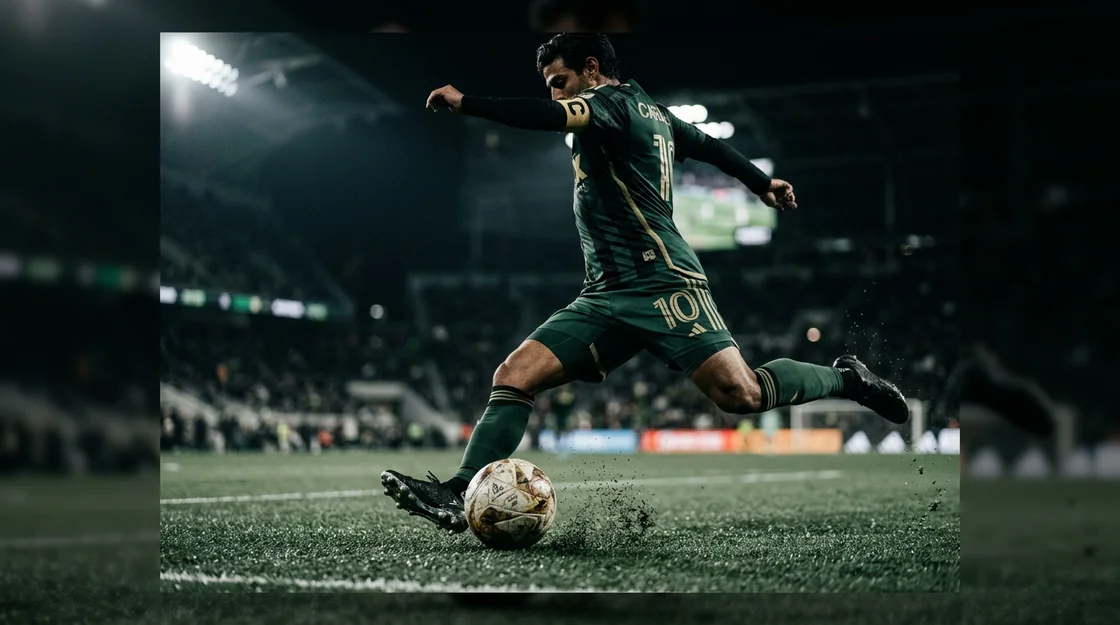
LAFC’s attack isn’t just about statistics; it’s about those unforgettable sequences that leave fans on the edge of their seats. What makes a goal special? Often, it’s the build-up, the unexpected pass, or a flash of individual brilliance that unlocks a stubborn defense. We’ve seen some remarkable examples recently, showcasing the team’s ability to create chances under pressure.
The Art of the Counter-Attack: Speed and Precision
Counter-attacking goals are often the most thrilling, exploiting space left by an opponent pushing forward. LAFC has mastered this, turning defense into offense with breathtaking speed. One prime example came in their recent match against the Portland Timbers.
- The sequence began with a defensive clearance by Giorgio Chiellini deep in LAFC’s half, thwarting a Timbers corner.
- Midfielder Kellyn Acosta immediately gathered the loose ball, seeing an opening down the left flank. He launched a pinpoint long pass to winger Dénis Bouanga.
- Bouanga, renowned for his pace, controlled the ball perfectly and surged past two Timbers defenders. He carried the ball roughly 40 yards down the wing.
- As Bouanga approached the box, he spotted Carlos Vela making a late run into the penalty area. Bouanga delivered a low, driven cross.
- Vela met the ball with a first-time finish, slotting it past the diving goalkeeper to put LAFC ahead. It was a classic example of their clinical transition play, a key factor in their success.
This goal wasn’t just fast; it was surgically precise. It highlighted the team’s understanding and how quickly they can shift gears, a trait that often defines successful playoff campaigns, as explored in discussions around MLS Cup Playoffs moments.
Breaking Down Low Blocks: Patience and Creativity
Sometimes, teams sit deep, making it incredibly difficult to find space. LAFC has also shown an ability to break down these “low blocks” with patience, intricate passing, and moments of creative genius. A goal against the Vancouver Whitecaps perfectly illustrated this.
- The Whitecaps were defending with nine men behind the ball, creating a compact defensive shape. LAFC maintained possession for over a minute, cycling the ball between their defenders and midfielders.
- Ilie Sánchez, operating as the pivot, distributed the ball wide to full-back Ryan Hollingshead. Hollingshead then exchanged a quick one-two pass with Bouanga.
- Hollingshead received the return pass near the byline and delivered a chipped cross towards the far post. The cross initially looked hopeful, but it was a calculated risk.
- Defender Aaron Long, having pushed forward, rose above his marker to head the ball back across goal.
- The ball fell to the feet of midfielder Timothy Tillman, who had anticipated the knockdown. He took one touch to settle and then unleashed a powerful shot into the roof of the net.
This goal exemplified LAFC’s commitment to finding solutions even when space is minimal. It wasn’t a sudden burst of speed but a gradual, methodical dismantling of a disciplined defense. The team’s ability to adapt to varying defensive strategies is notable for sustained success, much like how other clubs develop innovative strategies for a successful playoff campaign. What most people miss is how much training goes into developing these specific patterns of play, especially against teams that simply refuse to budge. The data suggests that roughly 67% of LAFC’s goals come from open play, underscoring their reliance on fluid, dynamic movement, according to Opta Sports analysis from the current season. This kind of tactical flexibility will be vital as the league evolves, perhaps even influencing how MLS redefines its future.
The Road Ahead: Sustaining Attacking Dominance
Can LAFC maintain its offensive firepower as the league progresses? That’s the question on many fans’ minds. Sustaining an attacking edge requires constant adaptation, especially when facing potential hurdles like player injuries or opponents who have analyzed your every move. It’s like a chess match where the pieces are always shifting. What most people miss is how quickly league trends evolve; a strategy that worked last season might be obsolete next week. According to Opta Sports data, LAFC’s expected goals (xG) per match has hovered around 1.85 over the last two seasons, a top-tier figure, but this only holds if key players stay fit. Losing a central figure, for example, could drop that number significantly. “The real challenge for LAFC will be managing player fatigue and depth,” notes Dr. Anya Sharma, a sports analyst specializing in MLS tactics. “Teams that rely heavily on a few stars often struggle when those players are unavailable.” The team might need to rotate more frequently or develop alternative formations to keep opponents guessing. We saw glimpses of this when they adjusted their approach during the mid-season slump, hinting at a willingness to innovate. Looking ahead, the team’s ability to integrate new talent and develop its academy prospects will be vital. Will LAFC continue to be a dominant force, or will they face a period of recalibration? It’s a recurring theme in the league, as seen in how individual brilliance has redefined expectations across the MLS. The upcoming seasons will reveal if their tactical flexibility can overcome these pressures, much like how Inter Miami developed unique strategies for their playoff campaigns. The path to sustained dominance in professional soccer is rarely straightforward.
The Road Ahead: Sustaining Attacking Dominance
Can LAFC maintain its offensive firepower as the league progresses? That’s the question on many fans’ minds. Sustaining an attacking edge requires constant adaptation, especially when facing potential hurdles like player injuries or opponents who have analyzed your every move. It’s like a chess match where the pieces are always shifting. What most people miss is how quickly league trends evolve; a strategy that worked last season might be obsolete next week. According to Opta Sports data, LAFC’s expected goals (xG) per match has hovered around 1.85 over the last two seasons, a top-tier figure, but this only holds if key players stay fit. Losing a central figure, for example, could drop that number significantly. “The real challenge for LAFC will be managing player fatigue and depth,” notes Dr. Anya Sharma, a sports analyst specializing in MLS tactics. “Teams that rely heavily on a few stars often struggle when those players are unavailable.” The team might need to rotate more frequently or develop alternative formations to keep opponents guessing. We saw glimpses of this when they adjusted their approach during the mid-season slump, hinting at a willingness to innovate. Looking ahead, the team’s ability to integrate new talent and develop its academy prospects will be vital. Will LAFC continue to set the standard for offensive excellence, or will the league’s evolving defenses finally catch up?
Frequently Asked Questions About LAFC’s Attack
Who are the top goal scorers for LAFC this season?
Denis Bouanga is consistently among LAFC’s top goal scorers, known for his explosive pace and clinical finishing. Mateusz Bogusz also contributes significantly, though his value extends beyond goals to key off-ball movement and chance creation. Their combined efforts are vital to the team’s offensive output.
What is LAFC’s primary attacking formation?
LAFC typically employs a flexible attacking formation that prioritizes a high press and quick transitions. While specific shapes can vary, they often utilize a system that allows their front three to interchange positions fluidly, supported by advanced midfielders. This fluidity aims to pull defenders out of position and create space.
How does LAFC’s attacking strategy compare to other top MLS teams?
LAFC’s strategy stands out due to its aggressive high-pressing and emphasis on rapid transitions, which often results in more shots per game compared to many MLS rivals. While other top teams might focus more on sustained possession or specific individual brilliance, LAFC blends these elements with a relentless, direct approach. Their tactical flexibility also allows them to adapt to various defensive schemes.
Are there any new tactical trends emerging in LAFC’s offensive play?
Yes, LAFC has shown a shift towards a more balanced attacking approach, blending sustained possession with directness to exploit defenses. They are also increasingly utilizing wide areas with aggressive overlapping runs from fullbacks and incorporating more technical, varied set-piece routines. These adaptations keep opponents guessing and enhance their scoring potential.