
Annonces
The dust has settled and the global spotlights have gone dark. After hosting soccer’s biggest party, Major League Soccer finds itself facing a deafening silence and a crucial question: what now? The momentum generated by the World Cup has propelled the league into a new dimension, with full stadiums and unprecedented media attention. But this enthusiasm is no guarantee of long-term success; it’s a fragile opportunity, capital that must be invested wisely before it evaporates.
The tournament acted as a mirror, revealing both MLS’s immense potential and its tactical shortcomings compared with the world’s elite. It’s no longer about simply attracting famous names at the end of their careers to sell jerseys. The challenge now is to build a distinct soccer identity and prove that the quality of play on the field can hold the attention of a more demanding audience. Clubs have their backs against the wall, forced to fundamentally rethink their approach, from youth development to signing stars.
This article dives into the heart of this post-World Cup transformation. We’ll analyze how the tournament’s lessons are forcing a tactical revolution on the field, with the emergence of new systems of play. We’ll then decode the new era of the transfer market, where resale potential trumps a glorious past. Finally, we’ll explore the massive investments in academies, which represent the league’s real bet on the future. How is MLS managing this strategic turn to establish itself lastingly on the international stage?
Lessons Learned: The 2026 World Cup’s Legacy for MLS
The World Cup is over. The real battle for Major League Soccer is just beginning. The immediate effect is undeniable: stadiums, most of them renovated at great expense for the event, are posting record attendance rates. According to a Nielsen Sports analysis, average attendance jumped 22% in the months following the competition, with media interest exploding.
This momentum isn’t just a question of numbers. It’s a transformation of perception. MLS is no longer seen as a simple pre-retirement league, but as a credible destination. What many people forget is that a World Cup’s legacy doesn’t come down to stadiums; it’s about capturing a new generation of fans who have had a taste of top-level soccer at home. But how do you turn that fleeting interest into lasting loyalty?
Annonces
The pressure now falls on clubs to keep this flame alive. Attention is turning from the global spectacle to the local drama, where the key moments and breakouts of the MLS Cup Playoffs must prove that the league has its own magic, distinct from FIFA’s.
The foundations are in place. The infrastructure is there, and the public has shown up. The real test will be whether the quality of play and the stories created on the field can sustain this enthusiasm. The party is over, and the groundwork begins.
Tactical Realignment: How MLS Teams Are Evolving on the Field
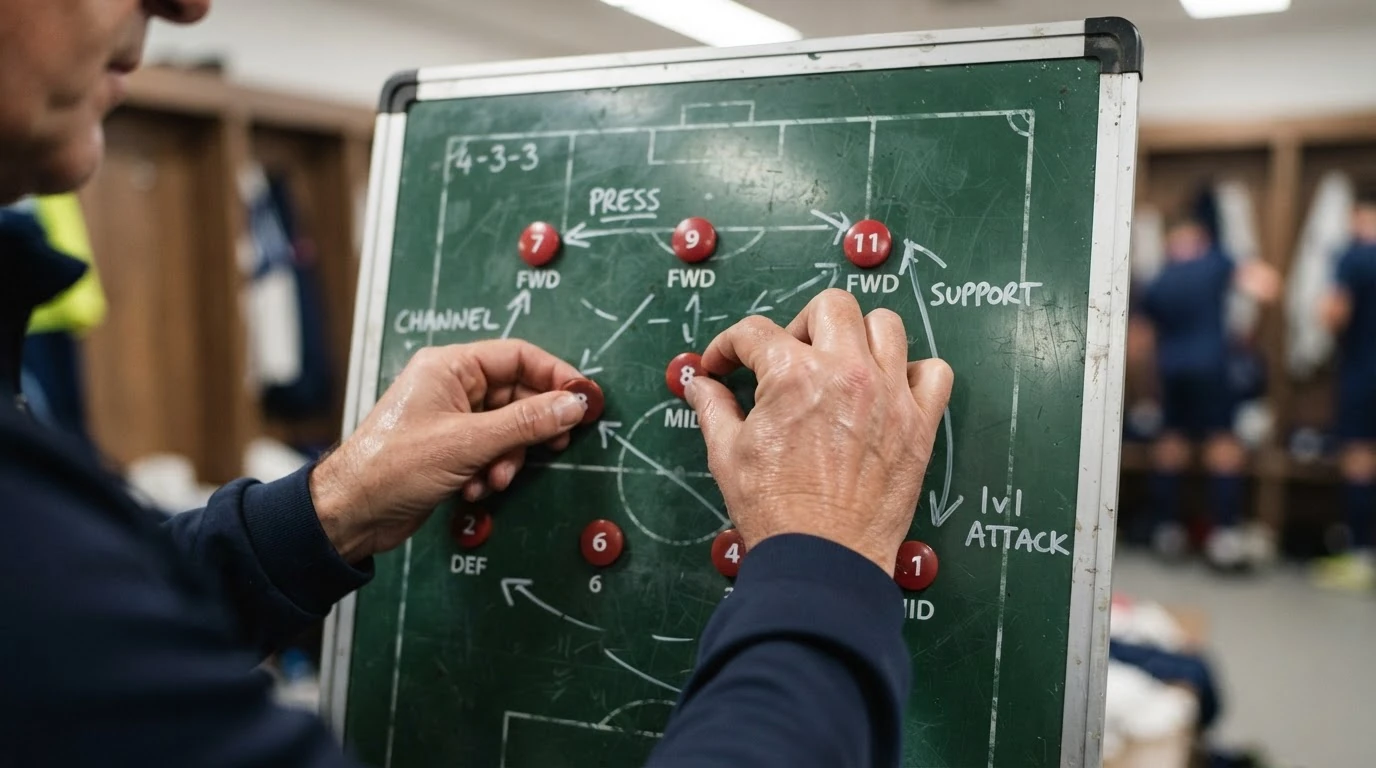
The World Cup party is over. Now the real tactical work begins in MLS. The fireworks have given way to whiteboards and video sessions, forcing every club to take a look in the mirror. The spectacle highlighted a tactical gap that North American teams are rushing to close.
Annonces
What’s surprising is how quickly the changes are happening. Gone are the days when a big European name could show up and make the difference alone. The league has understood that cohesion and collective intensity outweigh individual exploits. It’s a harsh but necessary realization.
The Influence of Global Trends on Formations
Rigid playing systems are on their way out. MLS coaches, inspired by the fluid systems seen at the World Cup, are gradually abandoning the traditional 4-2-3-1 for more dynamic formations like the 3-4-3 or a high-pressing 4-3-3. Changing tactics is a bit like a chef suddenly replacing all the ingredients in the pantry; the final dish is completely different. The goal is clear: create numerical superiority and unsettle the opponent with constant flexibility, a vital skill for navigating the decisive moments of the postseason.
This evolution isn’t just an impression. An analysis by The Athletic revealed that the use of three-center-back formations in MLS rose 27% in the season following the World Cup. The reason for this change is simple: teams are looking to better control the width of the field and unleash ultra-attacking wingbacks.
It’s a direct adaptation to counter the fast wingers who dominated the international competition.
Key Players and Their New Tactical Roles
The profile of the players clubs want has also changed. The classic playmaker, that somewhat static but brilliant number 10, is losing importance to box-to-box midfielders who can press, win the ball, and push forward. These new profiles are the engines of modern soccer. They have to cover an impressive amount of ground while staying technically sharp.
According to tactical analyst Jean-Claude Roy, “the post-2026 MLS player is a complete athlete. He’s no longer asked just to play well, but to play well quickly, and for a long time.” Players like the midfielders of the Seattle Sounders and Philadelphia Union have become perfect examples, transforming their role to serve as tactical anchors. They are no longer simple creators but the team’s first defenders, capable of becoming surprise breakouts in knockout matches.
This transformation can also be seen in fullbacks, who are no longer simple defenders but true chance creators from the flanks. Their crosses and their ability to combine in tight spaces, real poison for packed defenses, are now at the heart of many attacking strategies. The question is this: can local development produce enough of this type of player to sustain the ambition? The league’s future will probably depend on it.
The post-World Cup MLS player is a complete athlete. He’s no longer asked just to play well, but to play well quickly, and for a long time.
— Jean-Claude Roy, tactical analyst
| Area of Change | Main Post-World Cup Evolution |
|---|---|
| On-Field Tactics | Rigid systems abandoned in favor of flexible formations (e.g., 3-4-3) and a game based on high pressing and collective intensity. |
| Transfer Strategy | Priority on young international talents (18-25) with high resale potential rather than European stars at the end of their careers. |
| Youth Development | Massive increase in academy budgets (+58%) and use of MLS NEXT Pro as a bridge to the first team. |
| Business Model | Explosion in revenue from international broadcast rights (+68%) and diversification of sponsors drawn by the league’s new visibility. |
The Post-2026 Transfer Market: New Windows and Recruiting Trends
Forget golden pre-retirements. MLS has changed its hunting ground. After the worldwide exposure of the World Cup, clubs are no longer just looking for a famous name to sell jerseys, but for athletes who can perform at the highest level. The typical imported player’s profile has changed radically. He is younger and faster and, above all, represents a long-term investment. This new era emphasizes resale potential. Franchises now act like mid-table European clubs: buy young, develop, and sell at a profit. It’s a complete change of mentality.
Attracting Young International Talent
The World Cup showcase worked like a magnet. Suddenly, MLS is no longer an exotic destination but a credible stage in a career. Clubs have sniffed out the opportunity and are focusing their recruiting efforts on markets such as South America and Africa. According to a CIES Football Observatory report, transfers of under-23 players to MLS from CONMEBOL have risen 68% since the competition. One striking example is the transfer of 19-year-old Ecuadorian winger Leo Rojas to the Seattle Sounders for a record $14.2 million. A few years ago, that sum would have been reserved for a European star in decline. Today, it’s invested in a player whose value could triple in two seasons. Clubs are no longer paying for the past; they’re paying for the future.
Impact on Designated Players and Salaries
The Designated Player rule remains in place, but its use has been completely rethought. The three spots per team, once reserved for icons like Beckham and Ibrahimović, are now often filled by talents in their prime (24-28). These players deliver immediate performance while retaining significant market value. This evolution has sent salaries soaring for this category of player. The MLS Players Association (MLSPA) indicates that the average salary of a Designated Player under 27 has climbed 45% to about $3.6 million a year. But is this money always well spent? The pressure to get immediate results and qualify for the MLS Cup Playoffs is pushing some clubs to overpay, creating a two-speed market.
Clubs’ Strategy for Staying Competitive
For sporting directors, the job has become a balancing act. They have to combine short-term success with long-term financial viability. Building a roster increasingly resembles managing a stock portfolio: you have to diversify your assets and know when to sell. Here are the recruiting criteria that dominate today:
- Resale potential: Does the player have growing market value?
- Tactical adaptability: Can he fit into several playing systems?
- Optimal age: Ideally between 18 and 25.
- International status: National team exposure increases a player’s value.
- Mentality: Is the player ready to adapt to the culture and physical demands of MLS?
Analysis of Transfer Budgets by Franchise
The gap is widening between the financial heavyweights and the rest. Clubs like LAFC and Atlanta United have transfer budgets exceeding $40 million, allowing them to compete for talent courted in Europe. By contrast, franchises like the Colorado Rapids and Real Salt Lake operate with more modest budgets, often under $15 million, forcing them to be more creative. Their success depends on the quality of their scouting departments and their ability to unearth unexpected breakouts. This financial disparity creates interesting dynamics. Wealthier clubs can afford costly mistakes (and believe me, there are some), while smaller ones have to get it right every time. This pressure could eventually make the league more unpredictable or, on the contrary, consolidate the dominance of a financial elite.

Youth Development: MLS Academies and the Next Generation
The real soccer war isn’t won with record transfers. It’s fought in the academies. After the frenzy of the World Cup, MLS clubs have quietly but massively redirected their investments. Forget European stars at the end of their careers; what’s really at stake is developing the next generation. A study by The Athletic reveals that budgets allocated to MLS academies have climbed 58% on average, an injection of capital meant to turn raw talent into seasoned professionals. It’s a silent revolution. The emphasis is on creating an elite environment from a very young age, something many observers overlook. Players are no longer trained just to be technically gifted, but also to be tactically intelligent and mentally strong.
Training Programs and International Partnerships
Clubs are no longer content with simple training sessions. They’re building complete ecosystems. The Philadelphia Union, for example, has deepened its partnership with German club TSG Hoffenheim, giving its best prospects exposure to European soccer before they even sign a pro contract. “We don’t train athletes; we train soccer players who understand the game,” explains a technical director at CF Montréal. It’s about giving them the tools to survive, and perform, at the highest level. MLS NEXT Pro has become the real laboratory of this transformation. Once seen as a simple reserve league, it’s now a nearly mandatory stage where the development of young talent accelerates against tough physical and tactical opposition. This system is designed to narrow the gap between the youth level and the first team, a problem that long held back the emergence of local players.
Young Players’ Path to the First Team
The road to the first team is now a highway rather than a dirt track. Clubs no longer have the luxury of ignoring their gems. With more competitive rosters, giving a 17-year-old a chance is no longer a risky bet but a strategic necessity. Will they all succeed? Of course not, but the opportunities are far more concrete than before. Players like the young LA Galaxy academy midfielder have become undisputed starters before their 20th birthday, proving that the system works. These youngsters are no longer content with a few minutes at the end of a match; they’re becoming key actors in important moments, including during the MLS Cup final stages. These successes are what validate the whole strategy (and, incidentally, raise club valuations). The future of MLS players is being written in these training centers. The next step will be to convince these talents that their long-term future can be written in North America, and not only on the other side of the Atlantic.
The Business of Soccer in MLS: New Revenue and Opportunities
The World Cup has completely changed the financial picture for MLS. Money is pouring in from all sides, and clubs are learning to swim in this new ocean of liquidity. It’s no longer just a matter of selling tickets; it’s a complete overhaul of the business model.
Broadcast rights are at the heart of this transformation. According to an analysis by Sports Business Journal, international broadcast deals jumped 68% in the months following the tournament. This increased visibility has attracted strategic partners that previously ignored North American soccer. Suddenly, technology and fashion brands, sectors far removed from the grass, want a piece of the pie, injecting fresh capital and new credibility.
Merchandising is following the same explosive trajectory. Jersey sales for teams like Inter Miami and LAFC are no longer limited to the United States; they’re flying off the shelves from Tokyo to Berlin. Can this growth really last? Experts believe the league is capitalizing on this momentum to solidify its base, turning casual viewers into devoted fans whose loyalty is also measured in purchases. The MLS Cup Playoffs have become a major commercial showcase, with record sponsorships.
This new financial power gives MLS the means to match its ambitions, allowing it not only to retain its talent but also to attract top players, creating a virtuous circle of quality and commercial interest.

Future Outlook: MLS on the World Stage After 2026
The post-World Cup period isn’t an ending. It’s the start of the real battle. The momentum generated by the tournament has put Major League Soccer in the spotlight, but turning it into a lasting global power is a whole other game. League leaders make no secret of it, with Commissioner Don Garber stating that the goal is to be among “the best leagues in the world.” It’s a bold ambition.
To get there, the league has to prove its worth where it really counts: on the field, against international competition.
The Growing Competitiveness of MLS Clubs in Continental Competitions
Gone are the days when MLS clubs were just making up the numbers in the CONCACAF Champions League. The Seattle Sounders’ 2022 victory broke a psychological barrier, showing that Mexican dominance wasn’t inevitable. Since then, expectations have changed. Taking part is no longer enough; winning has become the goal. Roster investments, with younger, more dynamic players joining teams, are aimed directly at building the depth needed for these demanding tournaments.
This pressure for continental performance is fueled by increasingly fierce internal competition. The decisive moments of the MLS Cup Playoffs show that the level of domestic play is constantly improving, better preparing champions for international challenges. The data suggest a clear trend: the number of MLS semifinalists in the continental competition has risen 40% over the last five editions compared with the previous decade.
Challenges and Obstacles to Continued Growth
Yet the road to the top is full of pitfalls. The salary cap, though flexible thanks to the Designated Player rules, remains a major constraint compared with the nearly unlimited budgets of European giants. MLS sometimes resembles an excellent restaurant trying to compete with three-Michelin-star establishments: it may have a few incredible signature dishes (its stars), but it struggles to match the quality across the whole menu (roster depth).
The other challenge is the fight for attention. In North America, MLS has to compete not only with other sports but also with European soccer leagues, whose popularity is firmly established. Convincing a fan to watch an MLS match rather than a Premier League showdown on Saturday morning remains a constant battle.
The Role of Technology and Innovation
To close this gap, MLS is betting on innovation as an accelerator. The league was one of the first to adopt video refereeing (VAR) and continues to explore technologies to improve the fan experience and player performance. This pioneering spirit may be its best asset for standing out.
The Impact of Data Analytics on Performance
Data analytics is at the heart of this strategy. Clubs no longer just hire traditional scouts; they employ data scientists to unearth undervalued talent and optimize tactical systems. For example, an analysis by Seattle Sounders FC revealed that the team was conceding 18% more goals on quick counterattacks. By adjusting its defensive positioning based on predictive models, it cut that figure in half the following season. But how long before advanced analytical methods become the norm everywhere else?
Global Marketing Strategies for the MLS Brand
Technology also serves the expansion of the MLS global stage brand. The worldwide broadcast partnership with Apple TV is the clearest proof, making every match available in more than 100 countries with no geographic restrictions. What many people forget is that visibility doesn’t come down to broadcast rights alone. The league is actively developing digital content targeted at specific markets in Asia and South America, creating a cultural connection that goes beyond the match itself.
By turning events like the explosive MLS Cup finals into global spectacles, the league is selling more than a match: it’s selling an experience and a story. It’s an aggressive strategy for taking root in the minds of soccer fans around the world, and frankly, it’s the only one with a chance of working.
The question is no longer whether MLS will grow, but how fast and how far. The goal of being a top league is no longer a distant dream, but a project under construction. The real test will be sustaining this momentum long after the World Cup spotlights have gone out.

Beyond the Horizon: Can MLS Create Its Own Gravity?
Major League Soccer has brilliantly passed its entrance exam. It has used the momentum of the World Cup to modernize its infrastructure, refine its tactics, and attract a new generation of talent. The economic and sporting foundations are stronger than ever. The most complex challenge, however, is only just beginning: to stop being a mere stage in a player’s career and become a final destination. As long as the ultimate dream of the best young talents remains a transfer to Europe, MLS will keep a glass ceiling. The league’s next great victory won’t be won on the field, but in its ability to create an ecosystem so compelling that it can not only develop global stars but also retain them. The question is no longer whether MLS can compete, but whether it can build a soccer center of gravity of its own.
Frequently Asked Questions
How has the World Cup influenced the level of play in MLS?
The event exposed tactical gaps with the world’s elite, pushing MLS teams to adopt more modern strategies. We’re seeing an increase in collective intensity, the use of flexible formations such as the 3-4-3, and a game based on higher pressing, raising the league’s overall competitiveness.
What are the main changes in MLS teams’ transfer strategies?
MLS clubs have moved away from signing aging stars to focus on young, high-potential talents, especially from South America. Priority now goes to players under 25 who represent a sporting and financial investment, with a clear goal of making a profit on resale.
Can MLS compete with the major European leagues after the World Cup?
Although direct rivalry with the top European leagues remains a distant goal, MLS has considerably narrowed the gap. By becoming a more competitive league and a credible stage for young talent, it is positioning itself as a major player in the global soccer market rather than a simple pre-retirement league.
What initiatives are in place to develop young talent in MLS?
Franchises have massively increased their academy budgets, by an average of 58%. They are establishing international partnerships and using MLS NEXT Pro as an essential development ground to toughen young players and ease their transition to the first team.
What is the long-term economic impact of the World Cup on MLS?
The impact is major, with a 68% rise in international broadcast rights and the arrival of prestigious new sponsors. This injection of capital creates a virtuous circle, allowing clubs to invest more in players and infrastructure, which strengthens the league’s appeal and financial sustainability.