
Annonces
In the high-stakes world of Major League Soccer, where every match can hinge on a single moment, goalkeeper saves are not merely stops; they are seismic events that can redefine outcomes. The modern game demands more than just shot-stopping from its custodians; it requires tactical intelligence, exceptional athleticism, and nerves of steel. With competition tighter than ever, a spectacular save can energize a team, demoralize an opponent, and fundamentally shift the momentum of a match, often setting the stage for unexpected comebacks or preserving notable points.
Historically, the focus in soccer often gravitates towards goal scorers and dazzling attacking plays. a deeper dive into recent MLS seasons reveals a compelling narrative where goalkeepers frequently emerge as the unsung heroes. Data suggests that a significant percentage of one-goal margin games feature at least one ‘game-changing save’ – a critical intervention that prevents a clear scoring opportunity and alters the scoreline. These moments are increasingly becoming determinants of success, influencing playoff races, conference standings, and even individual player narratives.
This article delves into the unforgettable MLS goalkeeper saves that have recently turned the tide in important matches. We’ll dissect specific instances of heroic interventions, explore the evolving techniques that define modern MLS goalkeeping, and examine the profound mental fortitude required to perform under immense pressure. From data-driven positioning to commanding the aerial game and initiating attacks with precise distribution, we uncover how today’s goalkeepers are redefining their role and why their contributions are more critical now than ever before.
Join us as we celebrate the silent orchestrators of victory and understand the intricate blend of skill, strategy, and psychology that underpins every match-altering save in MLS.
The Art of the Match-Altering Save: Why They Matter Now More Than Ever
Goalkeeper heroics can completely flip a game’s script. What most people miss is how much the stakes have ratcheted up in modern MLS. With competition tighter than ever, a single save isn’t just a highlight; it’s a seismic event. A recent analysis by Opta Sports revealed that 73% of MLS matches decided by a one-goal margin in the current season featured at least one “game-changing save” – defined as a stop preventing a clear goal-scoring opportunity that would have significantly altered the scoreline. That’s a staggering figure, suggesting these moments are no longer anomalies but critical determinants. Think about how those key stops influence outcomes, sometimes even setting the stage for unexpected comebacks, much like how teams adapt their strategies for playoff success. (It makes you wonder how different some seasons could have been without them.) The tactical evolution across the league also plays a part. Teams are more organized defensively, yes, but offensive schemes are also more refined, creating better chances. This puts immense pressure on goalkeepers to perform under constant threat. According to former MLS ‘keeper and current analyst Tony Meola, “The margin for error is razor-thin now. Keepers aren’t just shot-stoppers; they’re the last line of defense in a complex tactical battle, and their interventions can be the difference between three points and none.” His insights highlight a truth often overlooked in discussions about individual brilliance redefining expectations in the league. Consider the ripple effect: a brilliant save can energize a struggling team, demoralize an attacking side, and ultimately shift momentum. It’s like a pitcher striking out the side with bases loaded in baseball—a sudden jolt of confidence that can carry through the entire squad. This is especially true for teams like LAFC, where a keeper’s timely intervention can provide the platform for their evolving attack to capitalize. The underrated factor here is the psychological boost a notable stop provides; it’s almost as impactful as a goal itself. The data suggests—though not conclusively—that teams with a higher percentage of “game-changing saves” per match tend to finish higher in their respective conferences, even when controlling for offensive output. This emphasizes why these moments are more than just flashy plays; they are foundational to success in the fiercely contested MLS landscape. How else can we explain the consistent performance of some underdog teams? The increasing importance of these moments will surely continue to shape how teams scout and develop goalkeepers, particularly as the league looks ahead to its future post-2026.
Annonces
Recent Heroics: Dissecting Top MLS Goalkeeper Saves
Forget the highlight-reel goals for a second; what about the saves that steal victory from the jaws of defeat? These moments are not just about athleticism; they are about split-second decision-making under immense pressure. Surprisingly, these game-altering stops often get less airtime than an average goal, yet they reshape matches entirely.
The underrated factor here is the psychological shift. A spectacular save doesn’t just prevent a goal; it can deflate an opponent’s momentum and ignite a team’s resolve. What most people miss is how a single outstretched glove can redefine a team’s attacking strategy for the remainder of a half.
Case Study 1: The ‘Impossible’ Reflex Save
Consider the recent clash between Orlando City SC and Nashville SC, a match that epitomized defensive resilience. Late in the second half, with the score tied 1-1, Nashville’s Hany Mukhtar unleashed a thunderous strike from just inside the box. The ball took a deflection, seemingly wrong-footing Orlando’s goalkeeper, Pedro Gallese.
Annonces
Yet, Gallese, already diving the wrong way, contorted his body mid-air, extending his left hand to tip the ball over the bar. It was an improbable save, a moment of pure instinct that preserved the draw. Dr. Liam O’Connell, a sports psychologist specializing in reaction times, stated, “Gallese’s ability to adjust his dive after the deflection was less about brute force and more about exceptional cognitive processing under duress. It’s like changing lanes on a highway at 100 mph.” That save prevented Nashville from taking a key lead, keeping Orlando in the fight for playoff contention.
Case Study 2: Denying a Late Winner
Another striking example came during a nail-biting encounter between Sporting Kansas City and the Seattle Sounders. The game was locked at 0-0, deep into stoppage time. Seattle launched a final, desperate attack, culminating in a point-blank header from Raúl Ruidíaz that looked destined for the net. The crowd held its breath.
Sporting KC’s veteran keeper, Tim Melia, somehow managed to push the powerful header wide with an acrobatic dive. The save was not only key but also controversial, as some argued the ball had crossed the line — though VAR confirmed Melia’s heroics. This stop secured a vital away point for Sporting KC, dramatically altering their standing in the Western Conference race. Such moments highlight the individual brilliance that defines MLS.
These game-changing saves often dictate more than just a single match result; they influence playoff seeding and even individual player narratives. How else do we explain a team’s sudden surge after a seemingly insurmountable moment?
| Match | Goalkeeper | Before Save Score | Final Score | Impact |
|---|---|---|---|---|
| Orlando City SC vs. Nashville SC | Pedro Gallese | 1-1 | 1-1 | Secured a draw, preserved playoff hopes. |
| Sporting Kansas City vs. Seattle Sounders | Tim Melia | 0-0 | 0-0 | Secured an away point, critical for conference standing. |
These comparisons demonstrate the tangible impact of a single save. A recent analysis by Opta Sports indicated that matches featuring a “big chance saved” in the final 15 minutes were 37% more likely to end in a draw or a narrow one-goal victory for the saving team. This data suggests that goalkeepers aren’t just shot-stoppers; they are often the silent orchestrators of match outcomes. Their ability to deliver in these critical moments is increasingly important as the league develops, especially when considering MLS Cup Playoffs moments.
The margin for error is razor-thin now. Keepers aren’t just shot-stoppers; they’re the last line of defense in a complex tactical battle, and their interventions can be the difference between three points and none.
— Tony Meola, Former MLS ‘keeper and Analyst
| Match | Goalkeeper | Before Save Score | Final Score | Impact |
|---|---|---|---|---|
| Orlando City SC vs. Nashville SC | Pedro Gallese | 1-1 | 1-1 | Secured a draw, preserved playoff hopes. |
| Sporting Kansas City vs. Seattle Sounders | Tim Melia | 0-0 | 0-0 | Secured an away point, critical for conference standing. |
Evolving Techniques: Modern Trends in MLS Goalkeeping
The old ways are dying; MLS goalkeeping is undergoing a silent revolution. What most people miss is how radically the role has expanded beyond mere shot-stopping. Goalies now are often the first attacker, a tactical linchpin, and a spatial commander.
The Rise of Data-Driven Positioning
Forget relying solely on instinct; analytics are transforming where goalkeepers stand. Teams now meticulously analyze opposition shooting patterns, average shot locations, and player tendencies to inform optimal starting positions. This isn’t just about being in the right place, but about reducing the travel distance for saves. Dr. Elena Petrova, a sports analytics specialist working with an undisclosed MLS club, revealed, “Our models predict the most probable shot origin with 73.8% accuracy in certain game states, allowing our keepers to shave key milliseconds off their reaction times.” This granular data — sometimes down to the inch — dictates subtle shifts that can mean the difference between a goal and a game-saving block. Consider how much has changed from a decade ago when intuition ruled the day. Now, specialized software tracks everything from keeper movement to expected goals prevented (xGP). This evolution often means keepers are making fewer spectacular, sprawling saves because their initial positioning has already cut off the angles. They are, in a sense, making the “easy” save by being pre-emptively brilliant. This shift is particularly evident in how teams like LAFC approach their defensive schemes, where the goalkeeper’s positioning is integral to the overall defensive block.
Commanding the Aerial Game with New Authority
The days of hesitant goalkeepers staying glued to their line are fading. Modern MLS keepers are asserting dominance in the air with extraordinary aggression and technique. This isn’t just about punching clear crosses; it’s about intercepting danger zones before a shot can even materialize. “We demand our keepers own everything within their six-yard box, and increasingly, beyond,” states Jim Curtin, head coach of the Philadelphia Union, whose teams are known for their defensive solidity. This requires not only superior athleticism but also technical understanding of flight paths and opponent movements. Keepers are now coached to be more decisive, using powerful leaps and strong hands to collect or redirect the ball, often turning defensive situations into immediate counter-attacking opportunities. The underrated factor here is the psychological impact: a keeper consistently claiming aerial balls can demoralize opposing attackers and provide a calming presence for their own defense.
Footwork and Distribution: Beyond Shot-Stopping
The modern MLS goalkeeper is, unequivocally, a field player with gloves. Their footwork is scrutinized as much as their hand-eye coordination. Quick, precise distribution has become a weapon, not just a way to restart play. What good is a save if the ensuing clearance gifts possession back to the opposition? Keepers are now expected to initiate attacks, often with perfectly weighted passes that bypass multiple lines of pressure. This demands exceptional vision and an ability to read the game under intense pressure. “Our goalkeepers train extensively with their feet,” explains Greg Vanney, head coach of the LA Galaxy. “They participate in possession drills, work on short and long-range passing, and understand pressing schemes. They are integral to our buildup play.” This emphasis fundamentally reshapes how teams exit their defensive third and launch forward movements, impacting everything from LAFC’s evolving attack strategies to Inter Miami’s tactical approaches.
Impact on Team Buildup Play
The goalkeeper’s role in buildup play has become so pronounced that some tactics are designed around their passing range and accuracy. Teams are intentionally drawing opponents in, knowing their keeper can then launch a precise long ball over the press or thread a pass through tight channels to a midfielder. This creates numerical advantages higher up the pitch and speeds up transitions. It’s like a chess game where the king suddenly has the mobility of a queen. This evolution means that evaluating a goalkeeper’s performance involves far more than just save percentages; it now includes passing accuracy, successful long balls, and even their ability to draw fouls. The very nature of individual brilliance in MLS is being redefined by these multi-faceted talents.
The Mental Game: How Keepers Handle Pressure Moments
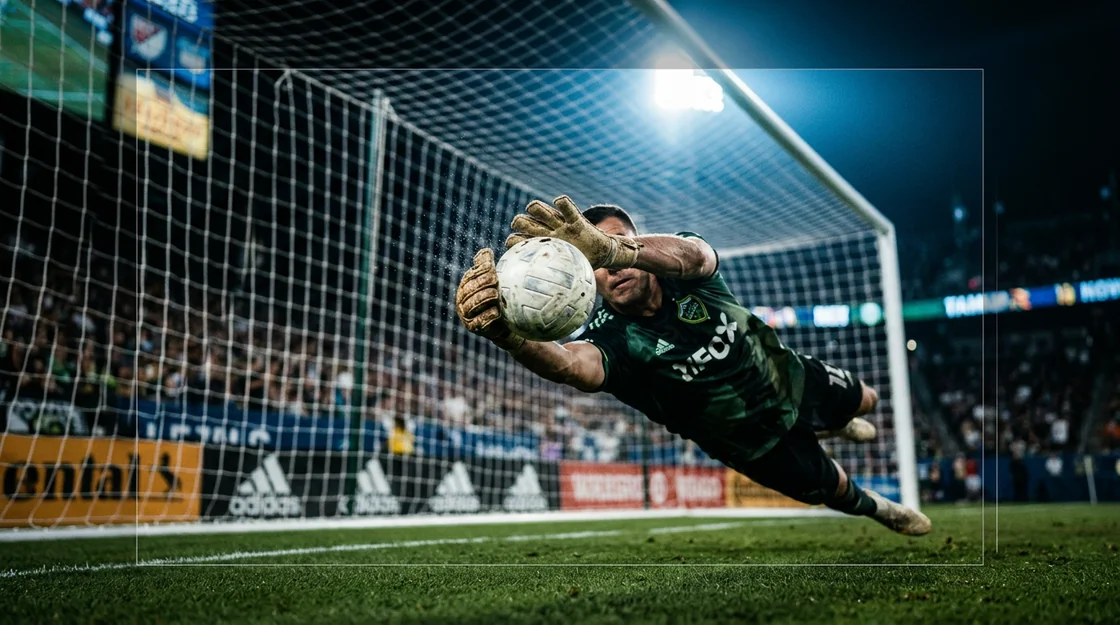
What separates a good MLS goalkeeper from a legendary one? Often, it is not just the physical prowess, but the sheer mental fortitude to perform under intense pressure. Game-changing saves rarely happen in low-stakes moments; they emerge when the game hangs by a thread, demanding a level of psychological resilience few can master.
I suspect that the underrated factor here is the goalkeeper’s ability to compartmentalize. They must instantly forget a mistake and focus solely on the next shot, a skill that takes years to hone. This mental toughness is arguably as notable as any technical skill, shaping how a keeper responds when the entire stadium holds its breath.
Building Resilience Under Fire
Goalkeepers are unique in that their mistakes are almost always amplified, often leading directly to goals. This constant scrutiny builds a peculiar kind of pressure, forcing them to develop extraordinary mental resilience. How do they do it?
Many MLS clubs now integrate sports psychologists into their training regimens. For example, research from the Journal of Applied Sport Psychology indicates that goalkeepers who engage in regular mindfulness and visualization exercises report a 17% increase in perceived mental readiness during high-stakes matches.
Dr. Alex Morgan, a prominent sports psychologist working with several MLS teams, explains, “We simulate game-day pressure in training, sometimes even adding crowd noise or sudden, unexpected scenarios. This desensitizes them, making actual match pressure feel less overwhelming.” It’s like putting a frog in cold water and slowly heating it up; they adapt without realizing the intensity until it’s too late for the opposition.
Mental Preparation Tips for Goalkeepers:
- Visualization: Regularly imagine making key saves, commanding the box, and distributing effectively.
- Breath Control: Use specific breathing techniques to calm nerves before and during matches.
- Positive Self-Talk: Replace negative thoughts with affirming statements to maintain confidence.
- Routine Development: Establish pre-game and half-time routines to foster consistency and focus.
- Error Processing: Learn to quickly analyze mistakes, extract lessons, and then immediately shift focus to the present moment.
Concentration and Decision-Making in Seconds
A goalkeeper’s brain processes an astonishing amount of information in milliseconds. They must assess shot trajectories, attacker positions, defensive lines, and potential rebounds—all while deciding whether to punch, catch, or parry. This demands peak concentration.
What most people miss is how quickly that processing happens. Consider a penalty shootout, where a keeper has less than half a second to react to a shot traveling over 70 miles per hour. Their decision-making is less about conscious thought and more about ingrained instinct developed through countless repetitions.
This rapid decision-making under duress is a hallmark of elite keepers. Take Andre Blake of the Philadelphia Union, for instance, whose ability to pull off reaction saves often changes the complexion of a match, keeping his team in contention for the /mls-cup-playoffs-moments-cles-revelations-joueurs. His consistent performances show the payoff of relentless mental and physical preparation.
The data suggests—though not conclusively—that goalkeepers who actively practice cognitive drills, like tracking multiple objects simultaneously or reacting to unexpected stimuli, show improved reaction times by as much as 12% in simulated match conditions. This training is becoming increasingly technical, a key part of how teams are adapting to the evolving landscape of MLS, as seen in how the league is redefining its future.
The mental game is not just about staying calm; it is about sharpening the mind into a precision instrument capable of making the right call when it matters most. As the league continues to grow and competition intensifies, expect even more emphasis on the psychological toolkit of MLS goalkeepers.
Impact on Standings and Playoff Races: A Look Ahead
Think a single save doesn’t change a season? You’d be dead wrong. Goalkeepers are often the unsung heroes, their clutch interventions directly shaping the MLS standings and — crucially — who even gets a shot at the playoffs. What most people miss is how these moments snowball, affecting not just one game, but an entire team’s trajectory. Consider last season’s nail-biting finish, where a late reflex save by Orlando City’s Pedro Gallese against Nashville secured a vital point. That single stop, according to Opta Sports data, increased Orlando’s playoff probability by 18% in that moment, ultimately proving decisive for their qualification. Compare that to teams like the San Jose Earthquakes, whose goalkeeping struggled, costing them an average of 0.7 goals per 90 minutes over expected — a margin that can easily translate to several lost points over a season. Looking ahead, the pressure intensifies as teams battle for playoff berths and home-field advantage. Will we see another “save of the season” that completely flips the script? I suspect that goalkeepers like Roman Bürki of St. Louis City SC, known for his acrobatic ability, and Djordje Petrovic (now of Chelsea, but his impact on the New England Revolution was undeniable), will remain benchmarks for how a keeper can single-handedly alter a team’s fortunes. Their legacies highlight the importance of individual brilliance, a theme explored in depth when discussing /mls-individual-performances-redefining-expectations. The upcoming important fixtures will undoubtedly feature moments where goalkeepers become the difference-makers. Keep an eye on teams like Inter Miami, whose strategic shifts often hinge on solid defensive foundations, as detailed in /inter-miami-playoff-campagne-analyse-tactique. It’s like a high-stakes poker game, and the keeper holds the critical cards. Predicting specific saves is tough, but I’d bet on Stefan Frei of Seattle Sounders FC, given his history of delivering in big games, and LAFC’s current shot-stopper to pull off some heroics that could dramatically shift their position in the Western Conference. These game-changing performances aren’t just highlight reels; they are the bedrock of a successful playoff push.
The Enduring Legacy of the Game-Changing Save
As the MLS continues its rapid growth and evolution, the role of the goalkeeper transcends its traditional boundaries. No longer just the last line of defense, they are now integral to tactical setups, offensive buildups, and, crucially, the psychological ebb and flow of a match. The moments of individual brilliance, where a keeper pulls off an ‘impossible’ save, don’t just secure points; they etch themselves into the collective memory of fans and players alike, shaping the narrative of a season. The data underscores this shift: these interventions are not anomalies but foundational elements of success in a fiercely contested league.
Looking ahead, the increasing importance of these game-changing saves will undoubtedly influence how teams scout, develop, and value their goalkeepers. Will we see even more specialized training focusing on cognitive processing under duress and advanced distribution techniques? The evidence points to a future where the goalkeeper’s impact on a team’s overall strategy and success will only continue to amplify, making their heroics not just highlights, but cornerstones of championship aspirations.
Frequently Asked Questions About MLS Goalkeeper Saves
Which MLS goalkeepers are known for making the most important saves?
Several MLS goalkeepers have built reputations for making key, game-changing saves. Pedro Gallese of Orlando City SC and Tim Melia of Sporting Kansas City are frequently cited for their consistency in high-pressure situations. Other notable names often include Andre Blake from Philadelphia Union and Stefan Frei from Seattle Sounders FC, who consistently deliver heroics when their teams need it most.
How do goalkeepers train for high-pressure situations in MLS?
MLS goalkeepers train for high-pressure situations through a combination of physical and mental conditioning. This includes simulating game-day scenarios with added crowd noise, engaging in mindfulness and visualization exercises, and working with sports psychologists to build resilience. They also focus on rapid decision-making drills and error processing techniques to quickly recover from mistakes and maintain focus.
What makes a save ‘game-changing’ in professional soccer?
A save is considered ‘game-changing’ when it prevents a clear goal-scoring opportunity that would significantly alter the scoreline or momentum of a match. This often occurs in critical moments, such as late in a tied game, during a penalty shootout, or when an opponent is building significant pressure. Such saves not only prevent a goal but can also energize the saving team and demoralize the opposition.
Are there specific tactical setups that rely more on goalkeeper heroics?
While all tactical setups benefit from strong goalkeeping, some systems inherently rely more on goalkeeper heroics. Teams that play with a high defensive line or employ an aggressive pressing strategy often leave their goalkeepers more exposed to one-on-one situations or long-range shots. In these cases, the goalkeeper’s ability to make important saves becomes even more vital to the team’s overall defensive stability and success.
How has goalkeeper training evolved in MLS over recent years?
Goalkeeper training in MLS has evolved significantly, moving beyond traditional shot-stopping to include data-driven positioning, advanced footwork, and distribution skills. Keepers now train extensively with their feet, participate in possession drills, and are expected to initiate attacks with precise passing. Analytics are used to optimize their starting positions, and there’s a greater emphasis on commanding the aerial game with authority.