
Annonces
An analysis of the Premier League winter recruitment strategies of the top 5 clubs for 2026 highlights crucial decisions that directly shape the title race and performance in European competition.
With the 2025-2026 Premier League season in full swing, anticipation around January’s movements is already palpable. The league’s top five clubs, all locked in a fierce battle for the title and European places, are actively preparing their Premier League winter recruitment strategies. These transfer windows are often decisive, allowing squads to be adjusted, unexpected gaps to be filled and a key area to be strengthened ahead of the second half of the season.
The Strategic Importance of the Winter Window in the Premier League
The winter transfer window, though shorter and often more complex than its summer counterpart, represents a crucial opportunity for Premier League clubs. For the teams at the top of the table, every recruitment decision can have a monumental impact, not only on their immediate performances but also on their long-term trajectory. It is not simply a matter of acquiring talent, but of doing so in a way that fits quickly into the team’s philosophy and adds value without disrupting the existing balance.
Annonces
The stakes are high: a recruitment error can be costly in terms of points dropped, damaged team cohesion and wasted financial resources. Conversely, a shrewd signing can transform a team, give it fresh momentum and propel it to unexpected heights. Clubs closely monitor their players’ performances, potential injuries, suspensions and evolving tactical needs in order to identify precisely where reinforcement is required.
The Specific Challenges of the January Window
- Player availability: Fewer top-level players are available, since many are already undisputed starters at their clubs.
- High costs: Selling clubs are often reluctant to let their best players go mid-season, which drives prices up.
- Adaptation time: Newcomers have less time to adapt to a new league, a new culture and a new system of play.
- Regulations: Rules on registering players for European competition can limit the options.
In short, the winter window is a period of high tension and strategic decision-making for Premier League clubs. Those who manage to navigate these complex waters often come out stronger, ready to face the challenges of the second half of the season with an optimised squad.
Arsenal: Consolidation and Squad Depth for 2026
Arsenal, often praised for their youth and dynamism, approach the 2026 winter window with a consolidation strategy. After several seasons of steady progress, the main objective appears to be strengthening squad depth without disrupting the cohesion that has been meticulously built. Rumours suggest an active search for a versatile midfielder able to cover several positions and a support forward to provide extra options in the event of injury or loss of form.
Annonces
The Gunners’ sporting department, under the guidance of their manager, favours profiles that align perfectly with the team’s fast, attacking style of play. The emphasis is on players who already have some experience in the Premier League or in top-level European leagues, so as to minimise adaptation time. The ability to press high and to contribute to building play from the back is also an essential criterion.
Potential Targets and Specific Needs
Midfield is a key area where Arsenal could look to strengthen. A player able to dictate the tempo, win the ball back and distribute accurately would be a major asset. In addition, with the demands of domestic and European competition, a forward able to play out wide or in support of the centre-forward could provide the rotation needed to maintain a high level of performance throughout the season.
- Defensive/box-to-box midfielder: To provide cover and a better attack-to-defence transition.
- Versatile forward: Able to play on the flanks or as a number nine, offering tactical options.
- Full-back: A solid deputy for the first-choice players, guaranteeing quality depth on the bench.
In summary, Arsenal’s strategy for this winter window is to fine-tune the squad. It is about finding complementary pieces that will slot in smoothly, allowing the team to remain competitive on every front and to continue its pursuit of the Premier League title.
Manchester City: The Eternal Pursuit of Excellence in 2026
Manchester City, accustomed to the summit of the Premier League, approach every window with the same ambition: to maintain and improve their standard of excellence. For the 2026 winter window, the Citizens’ strategy will likely centre on surgical adjustments, targeting specific positions where marginal improvements can make a big difference. The club is renowned for its ability to identify talents who fit perfectly into their manager’s complex system of play.
An analysis of first-half performances will reveal any weak points or areas where internal competition needs stimulating. It is not unusual to see City invest in promising young players who can flourish under their coaching staff while also making an immediate impact. Versatility and tactical intelligence are highly sought-after qualities, since they allow players to adapt to the different formations and strategies the team employs.
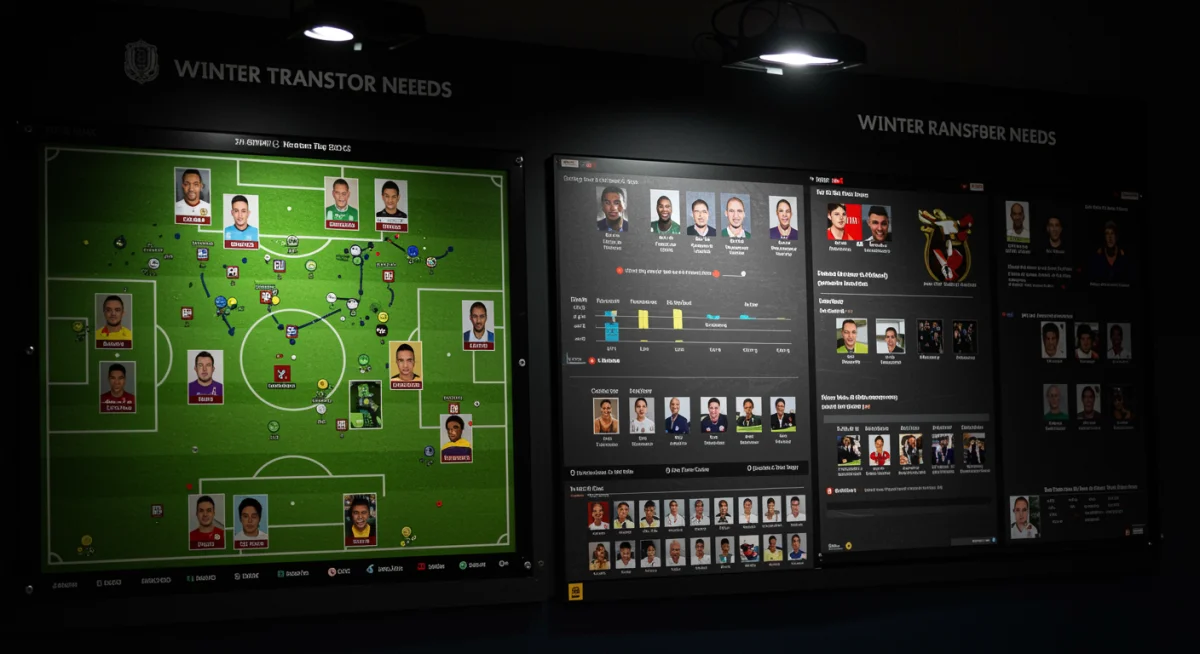
Manchester City’s sporting department also keeps a close eye on market opportunities. A world-class player whose contract is running down, or who is in a difficult situation at his current club, could become a priority target, offering excellent value for money.
The Positions Under Watch at City
- Centre-back: A reinforcement for rotation, able to play on either the left or right of the pairing.
- Attacking midfielder: An additional creator to diversify the attacking options.
- Quick winger: To bring pace and penetration on the flanks, especially after any departures.
In conclusion, Manchester City are never satisfied with what they have. Their approach to the 2026 winter window will be, as always, meticulous and geared towards the pursuit of perfection, aiming to ensure they have the most complete and competitive squad possible for the run-in.
Liverpool: Revitalisation and Anticipating Departures in 2026
Liverpool, under their emblematic manager, have always known how to reinvent themselves. For the 2026 winter window, the emphasis will likely be on revitalising certain areas and anticipating potential departures of key players. The club is used to targeting players who match its intense, energetic identity and who can adapt quickly to the famous “gegenpressing”.
Liverpool’s recruitment team is renowned for its ability to unearth low-profile talents with enormous potential. Data analytics plays a leading role in their decisions, making it possible to identify players whose advanced statistics match the system’s requirements. The club could look to lower the average age in certain positions or bring fresh energy to areas that showed signs of fatigue in the first half of the season.
Focus on Midfield and Attack
Historically, Liverpool have always excelled at recruiting hard-working midfielders and incisive forwards. For 2026, the search could focus on a box-to-box midfielder able to cover large distances and contribute in both phases of play. A versatile forward, capable of playing wide or through the middle, would also be a prime target to provide more attacking options and rotation.
- Dynamic midfielder: With a strong ability to drive forward and win the ball back.
- Forward who runs in behind: Able to create space and score important goals.
- Left-footed centre-back: To provide balance and better quality in possession from the back.
In short, Liverpool will use the 2026 winter window to inject fresh blood and ensure the team stays at the peak of its physical and tactical condition. The ability to anticipate future needs and find players who fit the club’s culture will be decisive for their success to come.
Chelsea: The Pursuit of Balance and Experience in 2026
Chelsea, a club that never hesitates to invest heavily in the transfer market, will look in the 2026 winter window to strike a balance between promising youth and proven experience. After several seasons of intensive recruitment, the priority could be to consolidate the squad with players capable of bringing immediate stability and leadership on the pitch. The aim is to turn a group of individual talents into a cohesive, winning team.
Chelsea’s manager, with the backing of the sporting department, will identify the positions where a lack of experience or insufficient rotation has been observed. An experienced centre-back able to organise the back line, or a combative midfielder capable of dictating the tempo and protecting the defence, could be priority targets. The club is also mindful of financial fair play, which could steer some decisions towards loans with purchase options or players out of contract.
Strengthening the Spine of the Team
Chelsea’s strategy for this winter window will aim to strengthen the spine of the team, adding maturity and resilience. A leader able to galvanise the troops in difficult moments is always an asset. In addition, internal competition is essential to keep every player at their best, and new arrivals can stimulate that dynamic.
- Experienced centre-back: For defensive stability and leadership.
- Holding midfielder: To strengthen control of midfield and protect the defence.
- Clinical forward: A finisher able to convert chances and ease the attacking pressure.
In conclusion, Chelsea will use this window to refine their squad, adding pieces that bring not only talent but also experience and wisdom. The goal is to build a team capable of competing for the biggest trophies, both domestically and in Europe.
Tottenham Hotspur: Ambition and Opportunity in 2026
Tottenham Hotspur, a club in constant pursuit of their first major Premier League title, will approach the 2026 winter window with renewed ambition and a close eye on market opportunities. The Spurs’ strategy will likely be a mix of targeting players who fit the club’s attacking philosophy and looking for good value. The manager and the sporting department will work together to identify profiles that can make an immediate impact without weighing heavily on the finances.
The club has shown in the past a willingness to sign undervalued players or those out of contract who can flourish in a new environment. Pace, technique and the ability to score are highly prized qualities. Tottenham could look to strengthen their attack, bringing new options out wide or in support of the main striker, or to solidify midfield in order to improve transitions.
The Areas Spurs Need to Strengthen
With the demands of the Premier League and European competition, squad depth is crucial. Tottenham could target players able to fill several positions, giving the manager tactical flexibility. The search for young, promising talent that can develop within the club is also a constant in the Spurs’ recruitment policy.
- Creative winger: To bring magic and assists from the flanks.
- Box-to-box midfielder: A durable player able to cover ground and contribute in both phases.
- Quick centre-back: To complete the pairing and cope with the Premier League’s fast forwards.
In summary, Tottenham Hotspur will look to use the 2026 winter window to strengthen their squad intelligently, targeting players who can make a significant impact and help the club reach its ambitious objectives. The ability to seize opportunities will be essential to their success.
The Role of Data and Psychology in 2026 Winter Recruitment
Beyond the obvious tactical needs, the winter recruitment strategies of the Premier League’s top clubs in 2026 are increasingly influenced by advanced data analysis and player psychology. Scouting departments no longer rely on visual observation alone; they draw on predictive models, detailed performance statistics and behavioural analysis to make informed decisions. Every player is examined from every angle, from his potential adaptation to a new system to his mental resilience under pressure.
The integration of data makes it possible to identify talents that other clubs may have undervalued, or to confirm the potential of players already on the list. Metrics such as progressive passes, successful pressures or the ability to keep the ball under pressure have become as important as goals and assists. This scientific approach minimises the risk of error and maximises a transfer’s chances of success.
The Importance of Psychological Assessment
- Adaptability: The player’s ability to settle quickly into a new team culture and a new league.
- Winning mentality: The determination and mental strength to perform under the Premier League’s constant pressure.
- Compatibility with the squad: Harmony with the other players and the coaching staff to avoid dressing-room problems.
- Motivation: The desire to prove his worth and contribute to collective success.
Psychology plays an equally crucial role. A technically gifted but mentally fragile player might not succeed in the demanding environment of the Premier League. In-depth interviews, personality assessments and feedback from former clubs are all tools used to evaluate a prospective signing’s resilience and mindset. Clubs look for players who not only excel on the pitch, but who also have the character and mentality needed to thrive in such a competitive league.
In conclusion, winter recruitment in 2026 is a complex discipline that combines the art of negotiation, the science of data and a deep understanding of human psychology. The clubs that master all three are the ones that succeed best in building teams capable of winning titles.
| Club | Main Strategy |
|---|---|
| Arsenal | Consolidation and squad depth. |
| Manchester City | Surgical adjustments to maintain excellence. |
| Liverpool | Revitalisation and anticipating departures. |
| Chelsea | The pursuit of balance and experience. |
Frequently Asked Questions About the Premier League Winter Window
The winter window allows clubs to adjust their squads mid-season, fill gaps caused by injuries or loss of form, and strengthen key positions. It is a decisive period for staying competitive and pursuing end-of-season objectives, whether the title or European places.
The challenges include the limited availability of top-level players, often higher costs, reduced adaptation time for new signings, and restrictions linked to European competition. Clubs must act quickly and precisely.
Advanced data has become essential. It makes it possible to identify undervalued players, analyse specific performance metrics and minimise risk. This scientific approach complements traditional scouting observation for better-informed decisions.
The strategy varies by club and by need. Some look for experience for immediate impact and leadership, while others target youth for the future and for integration into long-term projects. Balance is often the key to a high-performing team.
Psychology is crucial for assessing a player’s adaptability, mentality and compatibility. Technical talent must be matched by strong mental resilience and the ability to fit in smoothly with the squad in order to succeed in the demanding environment of the Premier League.
Conclusion
An analysis of the winter recruitment strategies of the Premier League’s top five clubs for 2026 reveals growing complexity and sophistication. Whether it is Arsenal’s consolidation, Manchester City’s pursuit of excellence, Liverpool’s revitalisation, Chelsea’s search for balance or Tottenham’s ambition, each club adapts its approach to its specific needs and its playing philosophy. The January window, though strewn with pitfalls, remains a pivotal period in which informed decisions, grounded in deep analysis of data and player psychology, can genuinely shape the destiny of a season and, potentially, of a decade for these giants of English football.