
Annonces
In the competitive world of college soccer, a result is never just a score on a scoreboard. Every win, every defeat, every last-minute goal is a shockwave that travels far beyond the field. For thousands of young athletes, these matches are not games but open-air auditions that can define a career, open the doors to professional soccer or close them for good. It is an arena where the pressure is constant and the stakes go well beyond sport.
This ecosystem is structured mainly around the NCAA and the NAIA, organizations that govern a colossal talent pool. They create a hierarchy in which visibility, resources and opportunity are not distributed evenly. Playing in NCAA Division I offers a springboard unlike anything at other levels, turning every season into a frantic race to attract scouts’ attention. For players, understanding that dynamic is not optional; it is a necessity for navigating a system as promising as it is unforgiving.
But how can a single match result have such a deep impact? This article decodes the mechanisms by which performances on the field directly shape players’ careers, influence the prestige and funding of college programs, and determine who gets a chance to shine at the highest level. We will analyze the key factors behind success and the current challenges redefining this constantly evolving landscape, from the transfer portal to the pressure for immediate results.
The College Soccer Ecosystem: More Than Just Matches
College soccer is far more than a student competition. It is a genuine talent nursery, a complex system in which every match result can redefine careers. For many, it is the last step before the professional world, an almost obligatory stage for young players who dream of making it.
The structure is split mainly between two major bodies. The best known is the NCAA (National Collegiate Athletic Association), which oversees the vast majority of programs across its three divisions. Alongside it, the NAIA (National Association of Intercollegiate Athletics) also offers a competitive platform. According to NCAA data, more than 48,000 student-athletes play soccer across roughly 1,900 men’s and women’s programs, a colossal figure that shows the scale of the system.
Annonces
But what is the real influence of that structure? It acts as an intense filter. A player in NCAA Division I does not have the same visibility as one in the NAIA, which directly affects his chances of being spotted. Think of it as a multi-lane highway where everyone is heading in the same direction, but at very different speeds. The ecosystem governs everything, including the complex transfers between universities, which have become a career strategy in their own right.
Every match is therefore a test. A good season can attract the attention of professional scouts and change perceptions in the global transfer market. Results are not only numbers on a scoreboard; they are the fuel that feeds the hopes and disappointments of thousands of young athletes.
How Results Shape Athletes’ Careers
Wins pay. Literally. For a college athlete, a good result on the field is not only a matter of pride; it is a direct investment in his professional future. Every match won, especially in the national tournaments, exponentially increases a player’s visibility with professional scouts and agents. It is a brutal truth of elite sport.
Annonces
Good team results act like a giant spotlight. A player can have impressive personal statistics, but if his team finishes near the bottom, his talent risks being lost in the noise. Collective performance validates individual talent.
The Scouting Shop Window: Beyond Individual Statistics
A successful playoff run is the best possible advertisement. According to an internal analysis by Major League Soccer (MLS) scouts, players on teams reaching the College Cup Final Four receive on average 65% more trial offers than players with similar statistics on teams that did not qualify. Why? Because winning under pressure demonstrates mental strength, a quality raw numbers cannot capture. A scout from an Eastern club summed it up: “I would rather have a winger with 8 goals on a championship team than a forward with 15 goals on a team that does not know how to win.”
What many people do not realize is that team performance also influences scholarships. A winning team generates more revenue and prestige for the university, which often translates into bigger budgets for the soccer program. That makes it possible to offer better scholarships to attract — and keep — the best talent. It is a self-reinforcing cycle.
Going Pro: The College Springboard
College soccer has become a direct springboard to the professional world. Players such as Jordan Morris, who went through Stanford before shining with the Seattle Sounders, are perfect examples. His NCAA championship win was a catalyst, proving he could lead in high-stakes matches before he even signed his first professional contract.
For athletes, every match is an audition, where their ability to influence soccer results is scrutinized. Understanding the inner workings of the college transfer market is therefore essential for any ambitious young player. Strong performances open unexpected doors, including opportunities abroad for those who catch the eye of international scouts. Those scouts increasingly follow NCAA competition, seeing this talent pool as a cost-effective alternative to European academies. A player’s path can change in a single season, taking him from near unknown to a priority target in the summer transfer window. The pressure is immense, but the potential reward defines careers before they have officially begun.
I would rather have a winger with 8 goals on a championship team than a forward with 15 goals on a team that does not know how to win.
— Anonymous scout, Major League Soccer
| Area of Impact | Direct Influence of Results | Concrete Example |
|---|---|---|
| Player Careers | Increases visibility with professional scouts and the chances of being drafted. | Players on Final Four teams receive on average 65% more trial offers. |
| Funding & Facilities | Wins generate more donations, ticketing revenue and merchandise sales. | A leading program can operate on a budget four times larger than a mid-table program’s. |
| Talent Recruitment | A winning program attracts the best high school prospects, creating a cycle of success. | Athletes contacted by national Top 25 programs are 68% more likely to commit. |
| University Prestige | Sporting success enhances the institution’s overall reputation and attracts more applications. | A good season can generate national media coverage, benefiting the whole university. |
Results: A Mirror of Program Prestige and Funding
Winning is not only about pride. In college soccer, every goal scored, every match won, converts directly into money, prestige and pulling power. It is a currency far more powerful than a trophy in a cabinet. Programs that win do not just celebrate; they build empires.
Results on the field shape the perception of an entire university, well beyond the athletics department. A winning season can generate national media coverage, raising the institution’s profile and attracting applications from students who may never have kicked a ball in their lives.
The Pull on Future Talent
The best high school players want to play for the best teams. It is as simple as that. A program that strings wins together and regularly reaches the national tournaments becomes a talent magnet. Team recruitment no longer happens only through letters and visits, but through the reputation results build. Winning is the best advertising there is.
What many people do not realize is that scouts are not only looking at individual statistics. They watch the winning culture. According to an analysis by NCSA (Next College Student Athlete), athletes contacted by Top 25 programs are 68% more likely to commit. Why? Because those programs are seen as direct springboards to a professional career. Young players watch former teammates sign pro contracts and think: “I want to be next.” It is a self-reinforcing cycle in which success attracts talent that generates still more success.
The mechanics behind these moves are complex. To better understand how players navigate the system, it is worth reading a complete guide to transfers in college soccer.
Impact on Budgets and Facilities
College sports funding is a machine that runs on wins. Success on the field translates into increased ticket sales, merchandise and, above all, alumni donations. A leading program such as the University of Virginia’s can operate on an annual budget exceeding 5 million dollars, while a mid-table program will struggle to reach 1.2 million dollars. That gap is enormous.
That extra money is not just a bonus. It is reinvested in cutting-edge facilities — locker rooms worthy of professional clubs, state-of-the-art training fields and ultramodern recovery centers. It also makes it possible to attract and retain the best coaches and support staff (fitness coaches, nutritionists, sports psychologists). It is a bit like comparing a Michelin-starred restaurant kitchen with a fast-food one; both prepare food, but the tools and ingredients determine the quality of the final dish.
The National Ranking: A Key Indicator
The NCAA national ranking is the public barometer of success. It is not merely a number next to a team’s name; it is a powerful marketing tool that directly influences university prestige. Being ranked in the national Top 10 confers immediate legitimacy and media visibility that attracts sponsors and talent.
That ranking is external validation of a program’s quality. It justifies investment to university administrators and donors. For players, it is tangible proof that they are competing at the highest level, a strong argument when they consider their future. The pressure to maintain or improve that ranking is immense, because a fall can quickly be seen as the start of a decline, affecting morale and future recruitment.
This dynamic turns every match into a high-stakes event, where a single defeat can have repercussions far beyond the final score, influencing strategies in the next transfer window. The machine never stops.
The Key Factors Behind Exceptional Results
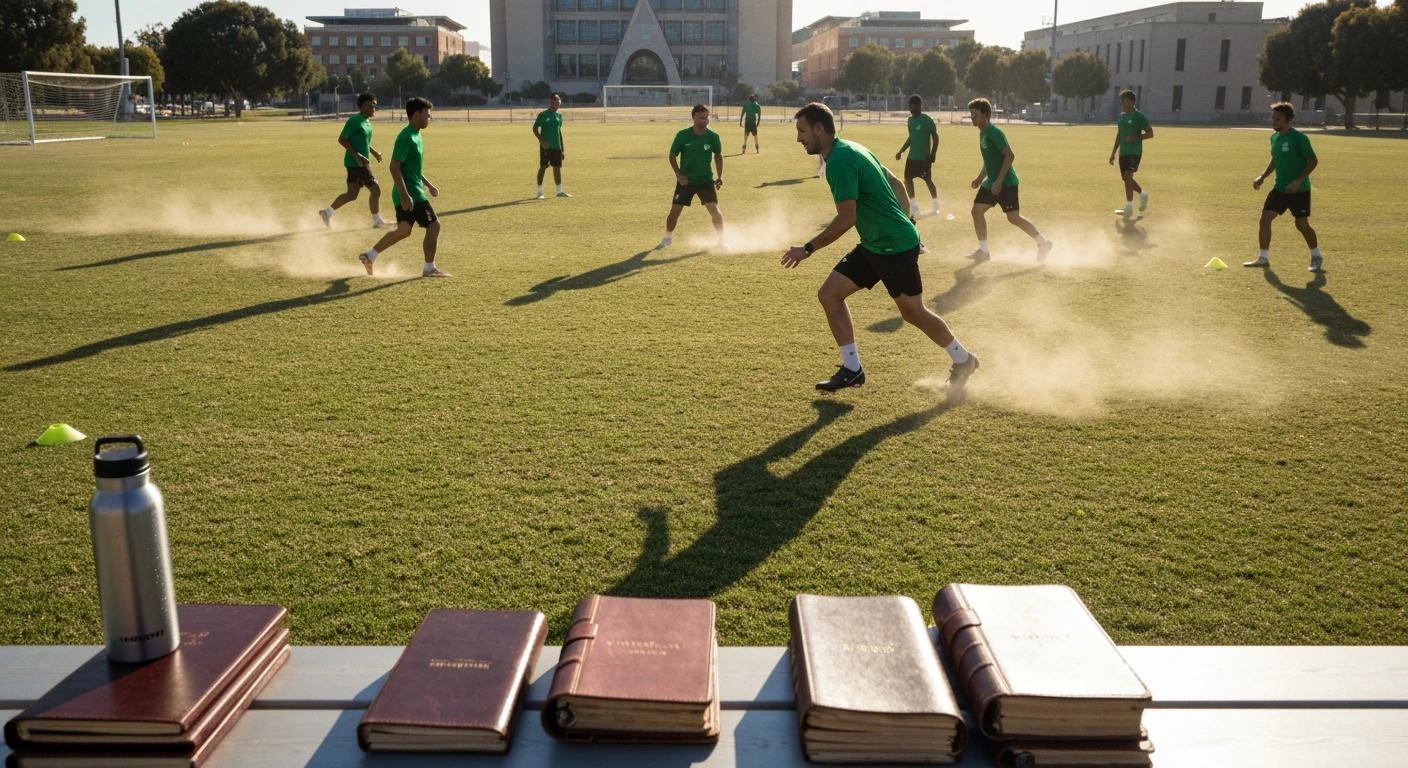
Forget luck. Crushing wins and dream seasons are never the product of chance. Behind every headline soccer result lies a meticulous architecture, a set of perfectly aligned variables that turn a group of talented players into a winning machine.
Some programs seem to have a secret formula. They dominate the rankings year after year, attracting the best prospects and filling their trophy cabinets. But that “formula” is not magic. It is a combination of hard work, smart strategy and an environment that fosters excellence.
The Importance of Coaching and Player Development
A great coach does not simply shout orders from the touchline. Elite coaching at college level is an art that blends psychology, data analysis and teaching. The best coaches are those who identify raw potential and sculpt it, turning a promising young athlete into a complete player. They adapt their tactical systems to their squad’s strengths rather than forcing players into a rigid mold. That is the whole difference.
Development goes well beyond drills on the field. It involves personalized nutrition programs, supervised recovery sessions and academic monitoring that keeps athletes eligible and focused. According to an NCSA (Next College Student Athlete) analysis, the Division I programs with the highest success rates allocate nearly 18% of their athletic budget to player development, excluding salaries. That long-term vision is crucial, because it prepares players not only for the next match but for a possible professional career, directly influencing the key moves and their strategic impacts in the transfer market.
Team Synergy and Mental Resilience
Team cohesion is the invisible cement that holds everything together when the pressure rises. It is blind trust in a teammate, the nonverbal communication that anticipates a pass, the willingness to make an extra effort to cover a mistake. That chemistry is built on retreats, group activities — and we are not only talking about team dinners — and shared challenges. It turns a locker room into a genuine family.
But what happens when the team is 2-0 down at halftime? That is where mental resilience comes in. Elite programs invest more and more in sports psychologists to train the mind as much as the body. Dr. Aidan Moran, a respected sports psychologist, argues that “mental strength can compensate for up to a 20% technical deficit in crucial moments”. That psychological edge is often what separates a good result from a bitter defeat. The ability to handle pressure and bounce back from failure is a skill that can be learned.
The following elements are often present in the highest-performing programs:
- Stable, visionary leadership: A head coach and staff who share a clear, long-term playing philosophy.
- Cutting-edge facilities: Training fields, weight rooms and recovery centers that rival professional clubs.
- Strong institutional support: A university administration that values the soccer program and invests in its success.
- A culture of accountability: Senior players mentor newcomers and everyone is held responsible for their performance. The college soccer transfer market is, incidentally, very sensitive to a team’s cultural reputation.
- Integrated mental preparation: Regular workshops on stress management, focus and visualization.
These factors do not guarantee a championship every season, but they considerably increase the odds of producing consistent results and building a lasting dynasty.
Current Trends and Challenges in College Soccer
Pressure, transfers, money. The game has completely changed. The pursuit of immediate results has turned college soccer into a genuine competition machine in which patience no longer has a place. Every performance is dissected, every defeat questioned, forcing programs into a short-term mindset that can sometimes harm player development. It is immense pressure for athletes who are still learning.
One of the major developments is the explosion of the transfer portal, a kind of permanent transfer market that has reshuffled the deck. Coaches now have to manage their squads like professional managers, constantly monitoring opportunities. Understanding the inner workings of that market has become essential to building a team. According to Marc Dubois, an analyst for College Soccer Weekly, “nearly 28% of Division I players now explore the portal each season”, a figure that has doubled in a short time.
Recruitment has become a constant battle.
This new dynamic — almost a copy of professional soccer — poses serious challenges. Loyalty to a university erodes, and building a team culture over several years becomes a balancing act. But at what cost does this professionalization come for young people juggling studies and elite sport? Institutions now have to navigate between the appeal of strategic transfer moves and the responsibility of protecting their student-athletes’ wellbeing.
Looking Ahead: Anticipating the Next Big Impacts
The future of college soccer is already here, and it looks nothing like what we have known. Far from the idealized picture of amateur sport, the landscape is transforming at breakneck speed, driven by technology, money and a new generation of player-entrepreneurs. Soccer results are no longer just scores, but data that feeds a far more complex machine.
The Digital Era and Talent Visibility
Today, a player no longer has to wait for a scout to attend his Saturday match. Every action, every goal and every assist can be filmed, edited and shared on social media within minutes. That instant visibility (think Instagram Reels and viral TikTok clips) has completely reshuffled recruitment. Lower-division programs can now showcase their gems, who once stayed in the shadow of the NCAA Division I giants.
This democratization of visibility is a double-edged sword. It offers unprecedented opportunities to overlooked talent, but it also exposes young athletes to constant public scrutiny. A recent study by the sports marketing agency Two Circles found that engagement on college players’ posts rose 73% across two seasons, creating pressure to maintain a perfect image. Career management begins long before the first pro contract is signed, and the strategic moves of young talent are scrutinized like never before.
The Growing Role of Sponsors and Partners
Money is flowing into college sport, and not only to build bigger stadiums. With the new NIL (Name, Image, and Likeness) regulations, players can now monetize their popularity. From local brands to national sponsors, everyone wants to be associated with soccer’s new stars. A single sponsored post can earn a star player what once amounted to a year’s scholarship.
That injection of capital changes priorities. Universities no longer simply develop athletes; they have to help them build a personal brand. It is a radical change. The athletic director also becomes a business adviser, and the athlete the head of his own small company.
Pros and Cons of Increased Commercialization
This creeping professionalization of college soccer has sparked intense debate. Is it a natural evolution or the loss of amateur sport’s soul? The answer, unsurprisingly, is complicated.
Advantages for Programs and Athletes
For universities, the financial benefits are obvious. Partnerships and broadcast rights fund cutting-edge facilities, better coaching and more attractive scholarships, creating a virtuous circle for attracting the best talent. For athletes, it is the chance to capitalize on their performances and prepare their financial future, fair compensation for the sacrifices they make. Some players from modest backgrounds can now support their families while continuing their studies.
Drawbacks and Pressure on Players
However, the pressure is immense. Players have to juggle academic obligations, sporting performance and management of their personal brand. Mental health has become a major issue. The fear of underperforming is no longer only tied to defeat, but to the potential loss of a sponsorship deal. What many overlook is the impact on team dynamics; income inequality between teammates can create tension. On top of that, the ease of transfers in modern college soccer adds another layer of stress, turning every season into a potential audition for a better deal elsewhere.
College soccer is at a crossroads. It has to navigate between the opportunities of this new economy and the risk of losing the identity that made it strong for decades. That balance will be hard to find.
Beyond the Score: What Future for College Soccer?
As college soccer continues to professionalize, the balance between athlete development and the relentless pursuit of results becomes increasingly precarious. The arrival of NIL deals and the growing fluidity of the transfer portal have added new layers of complexity, turning student-athletes into genuine entrepreneurs of their own careers. Analytics and performance-tracking technologies, once reserved for professional clubs, are now the norm, promising to optimize every aspect of the game.
Faced with this race for performance, one question remains: is the current system sustainable? By prioritizing short-term wins to secure funding and prestige, do we risk sacrificing players’ mental wellbeing and academic development on the altar of competition? The future of college soccer will depend on its ability to find a path that honors its educational role while meeting the demands of an increasingly lucrative sports industry.
Frequently Asked Questions
How do college soccer results affect a player’s chances of turning professional?
Good team results considerably increase a player’s visibility. Professional scouts favor athletes who perform under pressure on winning teams, because it demonstrates mental strength and an ability to fit into a winning culture, qualities that are essential at the professional level.
What are the most important factors for a college soccer program to achieve good results?
Success rests on several pillars: quality coaching focused on development, strong team cohesion, modern facilities and solid institutional support. Mental resilience, often developed with the help of sports psychologists, is also a key factor in overcoming adversity.
Is a university’s prestige directly linked to its soccer team’s performance?
Yes, significantly. A successful team generates positive media coverage, strengthens alumni pride, which can increase donations, and attracts students from all backgrounds. Sporting success becomes a powerful marketing tool for the whole institution.
What are the main differences between the NCAA and the NAIA in terms of results?
The main difference lies in the level of competition and visibility. The NCAA, especially Division I, attracts the best talent and enjoys far greater media coverage. As a result, NCAA results generally have a more direct and stronger impact on players’ professional opportunities.
Are there more athletic scholarships for teams with better results?
Indirectly, yes. Repeated success increases a program’s budget through revenue and donations. That financial strength makes it possible not only to offer full scholarships to attract the best talent, but also to fund a greater number of partial scholarships to build a deep squad.